Showing posts with label Gospels. Show all posts

Tuesday, February 11, 2020

For Everything There is a Season


Posted by Clark Bates
January 18, 2020


I was asked last year how I got involved in apologetics, and to be honest, I hadn’t reflected on that for quite some time. In one form or another, I have been engaged in apologetic ministry for roughly a decade, and in all that time of reading, studying, speaking and writing, it becomes easy to lose sight of how everything began. One day you’re just an apologist. You don’t know when you went from studying to be an apologist to being one, but at some point, everything shifted.


As I reflect on it now, I have to say that I entered the world of apologetics a few years after coming to Christ. You see, prior to my being a follower of the Lord I was not a good man. My sins were many and some were illegal. While I had been justified a few years prior, the crimes I committed caught up with me and I had to face justice for them. While I was in prison, I was given a pair of headphones that were useful for two things: listening to AM/FM radio and the television in the common area. I wasn’t much for television, so I used them for radio. The only problem was that the prison house was cinderblock, as was my cell, which creates an excellent barrier to prevent radio signals from getting in. This meant that it was very difficult to find a radio station that I could receive in my cell, let alone a Christian one.

I was able to dial in one Christian radio station, but it only came in if I laid on my bed in my cell, pushed right next to the window. On Sunday afternoons, there was a program that broadcasted in San Diego right around lunch, for 1 hour. That radio program was called Stand to Reason. Yes, this is the same Stand to Reason operated by Greg Koukl, Amy Hall, and Alan Shlemon. For one hour, every Sunday Greg answered calls and dealt with the evidence for the Christian faith. In the darkest corner of my world, his voice was a beacon of light, reminding me that my faith was not vain. It strengthened me in ways that I can never express or repay.

After my release, I returned to my life, began working, and returned to serving my local church as I was able. I bought Josh McDowell’s book, Evidence that Demands a Verdict, and read it cover to cover. Before long, I was sharing in the adult Sunday Schools what I was learning. I read vociferously, digesting all four volumes of Norm Geisler’s Systematic Theology, Frank Turek’s I Don’t Have Enough Faith to Be an Atheist, and everything from Ravi Zacharias. It wasn’t long before I was teaching regularly in the church and fighting a pull on my heart to serve the Lord in some form of teaching ministry. The effectual calling upon me was confirmed by the elders of my church and I approached the pastor to share what was on my heart. To be honest, I thought I was crazy, because there was no way a felon could serve the church (at least that’s what I thought). But my pastor encouraged me to pursue the calling and begin the degree process to receive an MDiv. Not having had any education prior, this meant 7 years of schooling, but I signed up and my journey began.

As the years, and my training progressed I grew in wisdom and stature (metaphorically) with the Lord and others. I began to preach and teach in my church and others. I visited gatherings that were
interested in answering objections to the faith and helped strengthen the Body as I was able. Several years in, I was gifted with a scholarship to attend Frank Turek’s Cross Examined Instructor’s Academy, and I can honestly say that it changed my life. I learned how to focus my time and work in apologetics and to become a master of just one topic, rather than mildly familiar with many. I was fortunate to attend two Academies at different years and build a strong working relationship with many fellow apologists. From then to now, I have operated this website, completed my Master’s degree and continued to speak at various events in the areas I’ve lived. I’ve seen apologetics ministry go from being something almost unheard of to existing in every corner of the internet. For good or bad, apologetics and apologists are everywhere, and the Christian faith, to one degree or another, is being defended. For that I thank God.

But now we come to where I am at today. As I sit at my keyboard, I am in the final stages of a Master’s Thesis for my second Master’s degree. I took on this second degree as I felt the call of God on my heart with more clarity and a call to academic study. To attain a PhD, I must have a Master’s of Theology, so here I am, at the end of that road. To reach this destination I was given the inexpressible gift of a Fellowship at Phoenix Seminary to work under the intellectual giants, Dr. Peter Gurry and Dr. John Meade. I have been blessed beyond measure to travel to Oxford, England and learn paleography; to work with the Museum of the Bible and the University of Birmingham as a transcriber of Greek manuscripts; I have held the oldest fragment of the Gospel of Matthew in my hands, and I have humbly sat under the teaching of great and godly men and women. The baby Christian in that San Diego prison cell could never have fathomed where his life was headed.


All of that to say this, Lord willing, I will be working toward a PhD next year, and it will demand all of my focus and time for several years. Assuming anyone regularly reads this blog, it has probably been noticeable that I have posted less and less in the last year. This is because the sheer demand on my time is already very heavy and as much as I love apologetics, I simply cannot keep up. I have taken a great deal of time delaying this decision. I have prayed about it. I have sought counsel about it. And I believe that it is the right thing to do. At the end of this month, I will shut down this website and close the social media platforms for ExeJesus ministries. If asked, I will gladly speak at any gathering that would have me, but my time as an apologist has come to an end. I will always be thankful for everyone who encouraged me, supported me, and challenged me along this journey. And I will always defend the faith with love and compassion whenever I am asked about the hope that rests within me.


If I may pass on some parting words from ten years of observation, it is this: the best apologetic is the one that listens to the other person before speaking. It is the one that cares about the skeptic in the same way that it cares about the Christian. Apologetics is a part of evangelism, but it is not evangelism. Evangelism shares the beauty of the Gospel of Jesus Christ with a lost and dying world. You can be an excellent apologist and have answers for every question, but never share the Gospel. My parting plea to the numerous young apologists out there is simply this: love your enemy, because they will know we are Christians by our love. There is no other way.


May the Lord Bless You

May He Keep You

       May He Make His Face to Shine Upon You

  And be Gracious to You

         May the Lord lift up His Countenance Upon You

And Give You Peace.


An Appearance on Lawyers for Jesus


Posted by Clark Bates
June 28, 2016


I was recently featured on the Chicago radio program, Lawyers for Jesus.  The program airs live on AM1160 and the shows can be found as a podcast on iTunes and Soundcloud.  The show is operated by the law firm of Mauck & Baker LLC, a law firm intent on helping Christian ministries stand up for their legal rights in a modern society.  After listening to the broadcast, I encourage you to visit their website at http://mauckbaker.com/


https://soundcloud.com/lawyersforjesus/apologist-clark-bates-explains-how-christians-can-defend-the-bibles-validity-using-common-sense

Do We Believe in the Bible Because of Christ or in Christ Because of the Bible?


Posted by Clark Bates
April 22, 2019


Recently on social media, a Q&A from Dr. William Lane Craig’s website, Reasonable Faith, made the rounds.  Needless to say, it has caused no small stir amongst the Reformed on social media, and likewise it has concerned me.  Before I begin though, let me state that this is not going to be an attack on Dr. Craig or his theology.  I have great respect for Dr Craig and the work that he does. He has even given me some very wise advice early in my apologetic pursuits, and I will always be thankful for that.  What concerns me, and has for many years now, is the increase in compromise that I have seen come from within the so-called “Mere Christianity” movement, of which Dr. Craig is a large contributor.

These compromises often center doctrinally around what can best be described as Sola Resurrectio or the resurrection alone.  By this, I mean that the only important Christian doctrine that needs to be pressed on an unbeliever is the fact of the resurrection of Jesus Christ.  If this can be proven, usually from the famed “minimal facts” approach, it is theorized that everything else that Christians believe, and what the Bible teaches, must be acceptable.  While I disagree even on logical grounds that simply because Jesus of Nazareth rose from the dead, the rest of Christianity necessarily must be true, what is more troubling is the extent to which this perspective has been taken.

A popular evangelical minister has made headlines in recent years with ever increasing claims about the value believers should place on the Bible itself.  He has taught sermon series that challenge historical aspects of the Bible, cardinal beliefs of the Christian faith, and most recently suggested that Christians should cease to use the Hebrew Bible as it is not authoritative for the believer.  This preacher’s main thesis for this increasing polarity is that the only thing that matters is the resurrection.  It is Sola Resurrectio ad extremo. I am not laying this pastor’s actions at the feet of Dr. Craig, although it should be noted that Dr. Craig and other apologists involved in the Mere Christianity movement have continued to express support for this pastor and his actions.  Rather, this is just an example of the extremes to which Sola Resurrectio can go.

I say all of this to set the stage for why the question and answer article posted at Reasonable Faith has caused such a stir, and why the response from Dr. Craig is what it is.  The Question posed to Dr. Craig concerned an interview given by Dr. Craig in January of this year.  This is the question:


Hello Dr. Craig,


I appreciate your work and am going through the Defender podcasts I enjoyed your interview with Erik Thoennes of Grace Evangelical Free in January 2019. In that interview you said "We believe in the Bible because we believe in Christ. We do not believe in Christ because we believe in the Bible". Can you explain what you meant by that statement ?


Thank you !


I have not seen this interview, so I cannot comment on anything that was said during the actual discussion.  This is why I am limiting this article to Dr. Craig’s posted response.  It begins this way:


"Sure! What I’m expressing in a pithy way by this aphorism (which is not original to me!) is that in order to rationally believe in Christ as Savior and Lord, you need not embrace biblical inspiration or inerrancy. So long as the New Testament documents are sufficiently reliable to establish the historicity of Jesus’ radical personal claims and the historicity of his crucifixion, burial, empty tomb, post-mortem appearances, and the origin of the disciples’ belief in his resurrection, then you are warranted by the evidence in believing that Jesus rose from the dead and so was who he claimed to be. That suffices for a Christian commitment."


To begin with, Dr. Craig asserts that the “pithy aphorism” he has employed is referring to the belief in the inerrancy and inspiration of the Bible, but if that is in fact the case, and I take Dr. Craig at his word here that it is, the aphorism says nothing about either doctrine.  The purpose of an aphorism is to create an easy-to-remember mnemonic for a larger truth.  This aphorism seems to imply that the Bible should be doubted were it not for Christ.  If you have to explain the aphorism then it has failed to serve its purpose.  But let’s look at the larger claim being made.  Dr Craig says that,
“So long as the New Testament documents are sufficiently reliable to establish the historicity of Jesus’ radical personal claims and the historicity of the crucifixion, burial …then you are warranted by the evidence in believing Jesus rose from the dead and so was who he claimed to be.”

Here is where I struggle.  What appears to be going on is nothing more than a semantic game, for what Dr. Craig is saying is that we don’t believe Christ because of the Bible, but because of the reliability of the “New Testament documents”.  The New Testament documents are part of the Bible.  They were viewed as Scripture on par with the Old Testament within the lifetime of the apostle Paul.  So, in reality Dr. Craig is affirming the exact opposite of his aphorism.  He does in fact believe in Christ BECAUSE he believes in the Bible! I actually don’t disagree here either.  I believe that the Bible is the sole infallible rule of faith and practice for the Christian and that includes the belief in the resurrection of Jesus Christ.  Despite the increasing trend of shying away from referring to the Bible as the Bible, a rose by any other name….

Dr. Craig’s response does not end there.  He goes on to say:


"Even taken as ordinary, fallible human records, the New Testament documents have been shown to be reliable with respect to these facts. Too many Christians naively think that unless you presuppose biblical inspiration and inerrancy, the historicity of the life of Jesus goes down the drain. This attitude, far from showing confidence in the Bible, actually betrays a profound lack of confidence in its historical credibility. Without the theological assumptions of inspiration and inerrancy to hold it up, the Bible is implicitly taken to be untrustworthy on this view.


But once one becomes a Christian, then one submits to the teaching of the Lord Jesus.  When we see how Jesus regarded the Old Testament, we perceive that he taught it to be the inspired and wholly reliable Word of God. So as his disciples, we should, too. We believe in the Bible because we believe in him."


- William Lane Craig


While it might be true that some Christians believe that inerrancy and inspiration are the only means by which the Bible can be true, this is certainly not the prevailing view in academia or in the majority of seminaries or pulpits.  The following statement also seems to be a false dichotomy that believing that the Bible is inspired by God, something affirmed by the apostle Paul, is somehow naïve and betray a lack of confidence in its historical credibility.  Clearly the apostles and the Lord himself believed in the inspiration of the Old Testament AND its historical credibility.  To say that these “theological assumptions” are mistaken creates more havoc within Christian belief than most in the mere Christianity movement seem to recognize or want to acknowledge.

Finally, Dr. Craig affirms the inspiration of Scripture only after it is clear that Jesus believed this.  Yet, as I’ve stated above, Dr. Craig inadvertently affirms that belief in the reliability of the New Testament is how someone believes in Jesus, meaning that the entire argument is ultimately circular. If we remove the semantic wordplay the response devolves to, “I believe in Jesus because the Bible is reliable and because the Bible is reliable about Jesus, I believe that the Bible is inspired.

Conclusion


In the end, I agree with all the things that Dr. Craig inadvertently admits.  I do not agree with the use of confusing aphorisms that really only exist for shock value.  As I have written elsewhere, the most important verse in all of Scripture is 2 Timothy 3:16, precisely because it is the affirmation that all of Scripture is “God-breathed”.  This is the reason that the Bible carries the weight of authority that it did for the Jewish believers of old and the Christians that would follow.  To affirm it as any less, even with the noble intention of wanting to bring someone to faith in Christ, is to play a type of deceptive game.  It is not helpful to deceive someone into the faith.  Likewise, multiple studies from the Pew Research Center, Ligonier Ministries, and the George Barna Group repeatedly demonstrate that biblical literacy in the American church is at an all-time low.  The answer to this disturbing trend is not to remove large portions of the Bible to make it easier for Christians and non-Christians, but to increase the teaching of the full counsel of God’s Word, even in apologetics.  Let us strive for higher, not set the bar lower.

Where do You Want to Die? A Plea for Caution


Posted by Clark Bates
March 22, 2019


Everyone has one.  That mountain they're ready to die on.  There’s always at least one thing that you will not abandon, no matter how hard you’re pushed.  I’m willing to bet that, even if they’ve never thought of one, every person on the planet has a such a position.  This is a good thing.  I believe firmly that everyone should have convictions and that these convictions should be something that they will fight for.  You might say that’s a mountain I would die on.

That’s not to say that we all shouldn’t be willing to be reflective and analyze our convictions over the years, to be certain that we aren’t holding to something that may not be true.  After all, circumstances change, new evidence can be revealed, and as Socrates famously said, “The unexamined life is not worth living.”

The question everyone should ask themselves routinely regarding their particular “mountain(s)” is, “Do I need to die here?”  Basically, reflect on the issue at hand and determine if it really is absolutely necessary to your worldview that it be true, or that your position never change.  I bring this up because the tendency among Christians, and probably everyone else as well, is to make minor details of Christian belief the most important.  Having grown up in an IFB (Independent Fundamentalist Baptist) community, I was well-versed in the hundreds of minor details that were “essential” for someone to believe if they were a “real” Christian.

Examples?  This may be where I lose readers but there are many.  Does it matter which translation of the Bible you use?  What about wearing a hat in church?  Can a Christian smoke? Drink? Dance?  In the world of apologetics, we have many as well.  Does it matter how old the universe is?  Can you be a Christian and believe in evolution?  What if the Gospels were written later than 70 AD?  Does it matter if the meaning of a beloved Bible verse happens to be different than you’ve always thought?  What if the Canon of the Bible wasn’t ever actually decided formally?

Ask yourself, are these non-negotiables for you, or is there room for differences of opinion?  For many years, several of these positions were non-negotiables for me.  I would never have agreed that you could believe in an old earth, let alone evolution, and be a Christian.  I always believed that the New Testament existed as the 27 books we use today and that there was never any dispute in the matter.  And don’t even get me started on dancing (blame the IFB, but hey I was a kid, I didn’t know any better).  These days, whether by wisdom or folly, I don’t consider any of the items listed as non-negotiables of my faith.  Why?  Because Scripture does not affirm them to be, and my knowledge of both the positions themselves and those who hold to them has broadened.  Mind you, I do still have mountains I will die on, but these are not among them.

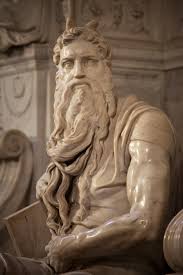
Mosaic Authorship = Biblical Inspiration?


I'm writing this for two reasons, the most important of which is that if you make everything a non-negotiable you will never have a clear grasp of the Gospel of Jesus Christ, because everything will get subsumed into the gospel.  If the gospel is everything it may as well be nothing.  The second reason is that if you or your children are led to believe that certain things are “mountains to die on” in Christianity, where the Bible itself does not, you are building a house of cards with your faith and it will come crashing down.

I was reminded of the importance of this, earlier in the week when I saw an ad on social media for an upcoming movie seeking to prove that Moses was the author of the Torah (the first five books of the Bible).  The tag line for the ad was, “Is the Bible the inspired Word of God? Or is it a book of fables and myths?”  Now, if you can’t spot the issue here, what this seems to suggest is that either Moses authored the Torah or the Bible is not inspired and must be reduced to fable and myth.  Do you see how tenuous a claim that is?  I even asked the question of the company posting the ad, how one would have anything to do with the other.  I did receive a reply from another Christian seeking to defend the statement, and he clearly felt it was necessary to believe that Moses wrote the Torah.  In our brief discussion, I never stated whether I believed in Mosaic authorship or not, only pointed out that the Bible could be the inspired Word of God even if someone else compiled the stories of Moses and wrote them down.  This didn’t go over well, but the conversation remained gracious and for that I’m thankful.

So, allow me to make my point a little more clearly here by using two examples: Mosaic authorship and the authority of the New Testament.  I’ll begin by stating that I actually do believe that Moses is the most likely candidate for the author of the Torah, and has traditionally been the author for thousands of years.  I also defend both the more conservative dating of the New Testament and the traditional authorship of the Gospels and Epistles.  That being said, these are not mountains to die on, and I don’t believe they should be for you either, though I can’t make that decision for you.  I only hope you will be willing to hear what I am about to say and take the time to reflect on the matter more.

Mosaic Authorship


What if Genesis – Deuteronomy were written by someone other than Moses?  Would that mean the Bible is not inspired?  The argument in the positive rightly points to the many places in the New Testament wherein the “law” is said to have been written by Moses.[1]  Therefore, the argument goes, if Moses didn’t write the Torah then Jesus is lying when he credits it to Moses and that makes the New Testament false, i.e. uninspired and not the Word of God.  Admittedly, there is logic to this argument in so far as it goes, and it is certainly true that Jews have always held, at least until modern times, that Moses was the author of the Torah, and Jesus does seem to suggest that Moses wrote the law.

Now, allow me to play devil’s advocate for a moment.  Modern scholarly consensus is that Moses did NOT write the first five books of the Bible.  The most common theory involves several variations on what is known as the Documentary Hypothesis or JEDP.[2] This theory maintains that the Torah was written long after the time of Moses, likely in the 5th or 6th century BC after the exile.  What’s more, there is little-to-no Mosaic influence at all, but rather various scribes can be detected within the texts based on their use of the divine names “Jehovah” (YHWH) and “Elohim”, or the focus on priestly functions or revisions of the law.  These various scribal works, it is claimed, were then compiled by later editors to create what is now the first five books of the Bible.  This theory is clearly, and understandably, offensive to most believers because it flies right in the face of what they’ve always believed, and stands directly opposed to what the first five books of the Bible seem to say.  It’s also not unrelated that many who hold to the documentary hypothesis deny most, if not all, the historicity or value of the entire Old Testament corpus.

But here’s the rub, what if they’re right?  What if I modified this position just a little bit and pointed out that while Moses is the main character in at least four of the five books of the Law, none of the books are themselves plainly authored?  If you look at them again, you might notice that all of them are formally anonymous.  Granted, 3 of them begin with the phrase, “then the Lord spoke to Moses…”, but this is the recording of a narrator.  The texts are entirely in the third person with the exception of direct discourse.  You might say, and some have, that the Torah is formally anonymous in the same way that the Gospels are.  In fact, and this is just something extra to chew on, the narrative of the Gospels in relation to Jesus are strikingly similar in form to the narration of Moses in the Torah.  No one claims that Jesus wrote the Gospels.  Therefore, it is entirely possible that, while the narrations of the Torah contain accurate historical accounts of the manner in which Moses came to be the leader of Israel and the manner in which the nation was given the Law through him, the actual compilation of the books and the narrative that links the stories together was created by another individual(s).

I will pause here to remind you that I subscribe to Mosaic authorship, so the pitchforks and torches can hopefully be put away, but even if the reality is something like I’ve described above, what does it change?  In most instances of the NT, Jesus refers to Moses writing something specific contained within the law, which is supported by the account in the OT. Therefore, there is no contradiction in saying that Moses wrote x or even that Moses gave Israel the law, AND there being a third person compiler of these accounts.  Does it change the value, quality or inspiration of the Torah or the Bible as a whole, if the author of any of the books is someone other than Moses?  Do we not subscribe to the authority of the rest of the OT even though more than 80% of the books are written by unknown authors?  Do we not submit to the authority of the epistle to the Hebrews in the NT despite having no knowledge of its author?  If you can answer, “nothing changes” then maybe Mosaic authorship isn’t a hill to die on, and it has nothing to do with the inspiration of Scripture.  But this also leads me to the second example.

The Authority of the New Testament


Whenever a defense of the New Testament Canon is provided in an apologetic setting, one of the key points is explaining how the books were selected or identified.  Most, myself included, will point out that the books had to be written by apostles, or have apostolic authority.  Exceptions are usually given for the epistles of James and Jude, as well as the Gospels of Mark and Luke, given that these were not apostles.  Mark’s Gospel is bolstered by the claim of the church Father Papias, writing in the 1st century, that Mark wrote down what Peter told him, thus making Mark’s Gospel really the Gospel of Peter and thus, apostolic.  Therefore, the claim goes, if the book could be traced to an apostle or close relation of an apostle it was considered canonical.

Just like above, I will pre-empt my devil’s advocate stance by saying that I subscribe to traditional authorship.  There is even an entire page of this website devoted to who wrote the New Testament where I lay out the arguments for that authorship.  But here’s the reality, if we set aside our commitments to Christian tradition and what we’ve always been taught, or even what is cleverly argued, there are several books of the NT that are anonymous.  While many have taken pains to deciphering how we can be reasonably be sure that the four Gospels were authored by the very men whom they are named after, they are still formally anonymous.[3] Nowhere in the Gospels themselves do the authors plainly identify themselves.  In a similar fashion, the epistle of James and Jude do not identify which James or which Jude.  Both refer to themselves as “slaves of the Lord (Jesus Christ)” and Jude states that he is the brother of James, but given that both names are counted in the most popular names of the region in the 1st century, any more specificity in identifying them must be based on reasoned conjecture and nothing more.  That’s not to say that the reasoning is unsound, far from it, it just means we need to be willing to see the evidence for what it is.[4]

Now, if my position on the Canon of the New Testament or the Inspiration of Scripture relies on apostolic authorship of the books, being faced with this kind of information could destroy my entire faith in the books as a whole.  It may even damage my belief in the inspiration of Scripture.  However, if I take a step back and really consider the arguments for canonicity, the apostolic qualification for books was NOT about who the author was, but rather if the text carried apostolic authority.  So, the test is not authorship but authority.  This may not seem like a difference, but it is.
Consider the argument often used that Irenaeus argued that the four Gospels were authored by those to whom they are ascribed.  If you look at his actual argument in full, two points emerge:
  1. He’s arguing not for their authorship per se, but that the teaching contained within the Gospels can be traced back to the teaching of the apostles of Jesus and that they did not require “perfect knowledge” to teach, and
  2. He’s making this argument in response to the claims of the Gnostics (specifically the Valentinians), that they are the ones who carry the teaching of the apostles.[5]
So, while this quote can be helpful in demonstrating early support for the authorship of the Gospels, it’s actually not why Irenaeus is writing what he does.

Now consider the difficulty of claiming apostolic authorship for canonicity with a book like Hebrews.  The author is completely unknown!  Sure, you can claim that many “think” that Paul was the author, but there’s nothing in the book that states this, and the language of the letter doesn’t match what we see in the Pauline letters.  Additionally, while I don’t agree, the arguments against several of the canonical Pauline epistles would suggest that many of the books of the NT are not apostolic.  However, when you realize that a book could be written by non-apostles, and several were, without it bothering the church for hundreds of formative years because a book was deemed canonical if it carried the authority of an apostle, all of these arguments against the canon disappear.[6]

Conclusion


I’ve spent quite a bit of time pointing out what I don’t think are mountains to die on, but I would be remiss if I didn’t mention what I DO think is a mountain to die on.  To put it briefly, those doctrines espoused in the Nicene Creed are non-negotiables of the Christian faith.  Prior to the time of the Creed, the Early Church maintained only a few mountains to die on: 

There is but one God and He is the Creator of all things.  
He has one, only-begotten Son, Jesus Christ, by whom alone salvation is possible.  
This man Jesus was truly God and truly man, born of a virgin, died by crucifixion, 
was resurrected on the third day and ascended into Heaven.  
The Holy Spirit of God has been given to His people through which they will receive power to tell others of the salvation made available to the world.  

These are, without a doubt, non-negotiable for the Christian.  All other points are ancillary to these, and while they will each have their own level of importance, there will always be room for discussion over them, and there always should be.

So, there is no misunderstanding me, please know my heart on this issue.  When I give lectures at a church and I bring up matters such as this, I am quick to point out that one day, the people will hear about these issues.  They will either hear it from someone like me or from someone like Bart Ehrman, and I’d much rather they hear it from me.  I want the church to be known for its level-headedness and careful thinking.  I want Christians to take captive naivete surrounding their faith and be prepared for the opposition they will face in the world.  I want them to know the challenges so that their faith takes hold of the fertile soil and digs deep roots, because the birds of the air and the thorns of the deep will come to try to snatch it away and choke the life from them, but a seed sown deep is not easily removed.  I will close with a quote from a friend of mine now at Tyndale House in Cambridge concerning the approach to the Bart Ehrman’s of the world:


“The problem isn't 'Ehrman (full stop)', it's 'Ehrman+antagonistic professor+ministers letting Christians hear about this stuff from Ehrman and antagonistic professors first'. Treating it as if Ehrman is the sole problem is a *really* bad idea because it leads to statements like ‘This is why I am wanting an actual list, to be able to demonstrate how deceptive Ehrman is’ and ignores our own failures to let our church members know what's out there before they hear it from someone who wants to use it in a way that would destroy their faith. 

Yes, Ehrman sensationalizes his point to draw conclusions that should not necessarily be drawn from the data he gives. But Christians do it too in our desire to respond to/disprove him. It's never a good idea to misrepresent the truth. Far better to be honest about what God has given us. To use a phrase that a couple of friends of mine use, there is a ditch on both sides of the road—don't fall into one of them because you're trying to avoid the other one.”


  • Author's note: In no way am I demanding that those who read this article agree with me in my positions, nor by citing other positions (i.e. theistic evolution) am I suggesting that I agree with them.  My only desire is that every believer be willing to reflect on the positions they have historically considered non-negotiable and simply ask themselves why those positions are mountains they choose to die on.


[1] Jn. 1:45; 5:46-7; Lk. 20:28; Mk. 10:5; 12:19, etc.

[2] J – Jehovah; E – Elohist; D – Deuteronomist; P - Priestly

[3] I find the manuscript evidence for consistent titles of the Gospels, early recognition of the church fathers with these titles and the clear means by which the entire church from its inception were able to distinguish between them (after all you had to know which Gospel you wanted copied for your use) to be substantial in supporting the traditional authorship, or at least, the fact that the Gospels have always been transmitted under the same names as we have today.

[4] This is to say nothing of the challenges to various Pauline Epistles that, especially to those untrained in the original languages, can be quite convincing.

[5] Irenaeus, Against Heresies, 3.1.1 – 3.3.1-4.

[6] By “apostolic authority” I mean that a book could be written by someone other than an apostle (i.e. Jude, James, Mark, Luke, Hebrews) yet contain teaching which clearly corresponded to the teaching of the apostles to the church.  If the message of the book met this standard it became canonical.  This also helps understand why books like the Gospel of Thomas, the Gospel of Peter, and others were not accepted, even though they were initially used by the church.

Monday, February 10, 2020

Does God Lead Us Into Temptation?


Posted by Clark Bates
January 9, 2019


Recently, it has been reported that the Pope Francis has been considering an official change to the “Lord’s Prayer” found in Matthew 6:9-13 and Luke 11:1-4.  This is not a new proposal, as it was discussed earlier in 2017.  The statement being considered for revision is found in Matthew 6:13/Luke 1:4,


“And lead us not into temptation, but deliver us from evil.”


The proposed change to the reading would render the verse,


“do not let us fall into temptation…”


Why the change?  The Pope has said that it leads individuals to believe that God leads us into sin, which He does not do.  He told an Italian reporter, “Do not let me fall into temptation because it is I who fall, it is not God who throws me into temptation and then sees how I fell…A father does not do that.  He helps you get up immediately.”[1]

Many Christians around the world, Protestant, Roman Catholic, or Orthodox, would likely agree with the pontiff’s statements, as this is a sentiment shared in much of Christianity.  But the question that presses upon me more than the papal theology is whether or not the change is legitimate?  The most important aspect of translation is a fidelity to the message of the original wording, therefore any change made to the wording, must not be made on theological grounds, but primarily on grammatical grounds.

Before I state my position, it must be stated that I am a Reformed Baptist, confessing the London Baptist Confession of 1689.  I stand in line with the Protestant Reformers in my belief that the Bible and the Bible alone is the sole, infallible rule and authority for the church.  Because of this, I do not recognize any authority of the Pope.  That being said, any objections I may have with the Pope or with a decision being made by the Roman Catholic Church does not extend to individual Roman Catholics.  If you are reading this and are a Catholic, I am not against you personally; I am for the Word of God.

“Lead us” or “Let us”


In both Matthew and Luke, the verse contains the same Greek phraseology, however Luke lacks the second half contained in Matthew.  In Greek, Matthew 6:13 reads,


“καὶ μὴ εἰσενέγκης ἡμᾶς εἰς πειρασμόν, ἀλλὰ ρῦσαι ἡμᾶς ἀπὸ τοῦ πονηροῦ.”


The first clause, “καὶ μὴ εἰσενέγκης ἡμᾶς εἰς πειρασμόν” currently reads in most English translations, “and do not lead is into temptation.”  Two preliminary points to make regarding this clause is firstly, that the use of μὴ (mā) is an emphatic negative particle often translated as “no” but with a more intensive force than its counterpart οὐ (ōō).  Therefore, the entreaty to the Lord is emphatic “please do not…”   Secondly, the word εἰσενέγκης is an Aorist Active Subjunctive 2nd person singular from the word εἰσφέρω which generally means “to lead into” or “to bring/carry in”.   There is no aorist form in English, so it becomes difficult to understand initially, but is best understood as an action that has occurred at some time in the past.[2]  The aorist tense only deals with the action having occurred not the duration of the event.  As a result, it is often rendered as a simple past tense.

However, there is another caveat to this word.  While it is an Aorist, it is Aorist Subjunctive.  The subjunctive mood is often defined as the mood of possibility or potentiality, leading many to interpret subjunctives as something that “might” happen.  This is not entirely accurate.  The subjunctive mood does deal with an indefinite action, but a probable one, therefore it is more the mood of probability.[3]  An example of the use of the subjunctive in another context is 1 John 2:28, where it reads,


“And now, little children, abide in him so that when he appears, we may have confidence and not shrink from him in shame at his coming.” (ESV)


John uses the subjunctive here, not because he is uncertain if Christ will appear, but because he is uncertain when he will appear.  In many cases the English translation of a subjunctive is accompanied with the English gloss “might”.  At other times, especially if the subject is plural, it can be glossed with “let us”.  Given that the key term being changed in the Lord’s prayer is an aorist subjunctive and the proposed change is “let us not fall into temptation”, this is likely the grammatical reasoning behind the change.

With all this information (assuming you’re still reading) it would appear that there is grammatical justification for the change.  After all, the Pope has even argued that the modern French translations of this passage have made this exact change.[4]  However, there is one caveat that should give us reason to pause. It’s known as a Prohibitory Subjunctive.  A Prohibitory Subjunctive has two features: 1.  It is a subjunctive in the aorist-tense form and 2.  It is negated with the emphatic μὴ.  As we have already seen, both features are present in this passage.  When a Prohibitory Subjunctive is used, the proper English translation should be an Imperative, or for lack of better terminology, it should be rendered as a command without any of the glosses that typically accompany a subjunctive. 

Examples of the Prohibitory Subjunctive are,


Do not think that I have come to abolish the Law or the Prophets…” (Matt. 5:17)


Do not be amazed that I told you that you must be born again…” (John 3:7)


and


Do not handle, do not taste, do not touch…” (Col. 2:21)


Therefore, if we are to be consistent with our translation, the same should be true of Matthew 6:13.  In which case the proposed “let us not fall into temptation” is more accurately rendered as it is currently,


Do not lead us into temptation.”


Theology or Methodology


This conclusion brings us to another point: if the reason for the change cannot be defended
grammatically or syntactically, it must be that it is being determined theologically.  In fact, the most [5]  An important point must now be made: when it comes to translation, an individual’s theology should not be their primary methodology.  Translation from one language into another is never exact, but the determinative factors for proper word choices should be the context of the passage itself and the semantic range of the Greek word(s) being translated.  This can be determined from the word’s usage in other Greek texts and the use of forms such as the prohibitive subjunctive in other Greek texts.  As Christians, our theology must come from the Scripture, not be imported into it, therefore the method by which we properly translate that Scripture should be the means by which our theology is shaped, not the other way around.
recent report on this discussion comes from the Daily Express wherein the council advising the Pope is quoted saying that the reason for the change is “theological, pastoral and stylistic.”

But….Does God “Lead” us into Temptation?


Having established that a proper translation of this section of the Lord’s prayer is how it has always been, we now have to answer the theological question behind the proposed change, “Does God lead us into temptation?”  For many, the immediate response is “no.”  After all, the epistle of James says as much,


“Let no one say that when he is tempted, I am being tempted by God, for God cannot be tempted with evil, and he, himself, tempts no one.”  (James 1:13 ESV)


In this case, how do we understand this section of the prayer?  Unfortunately, there is no, clear consensus of interpretation through the years of Christendom, leaving us today still struggling in many ways with what we are praying for, exactly.  I do not believe that I have the only answer to this question, but I would like to offer, what I feel are some clarifying thoughts:

  1. The passage in James is specifically referring to temptation to sin. In such a case, were a man or woman to sin in the face of temptation, they alone bear the responsibility for this sin.  Because of this, it can rightly be said that God does not tempt anyone to sin in such a way that alleviates them from personal responsibility.
  2. The word used in both passages translated “temptation” (πειρασμόν) can also mean “testing”. This is the same word used in the LXX reading of Genesis 22:1 where it clearly states that God “tested” Abraham.

What we are left with is a difficult position.  Namely, that God does “test/tempt” individuals, but not in such a way as to alleviate their responsibility if they sin.  Certainly, most Christians would not object to saying that God “tests” His people, for many of us have faced times of trial wherein our faith has been tested.  So, perhaps the struggle for English speakers really is a semantic one.

But there is one more point to consider, the second part of the verse, “but deliver us from evil/the evil one.”  Many, such as John Chrysostom and John Calvin, recognized that these were not two separate thoughts, but one and the same, merely stated in two ways.  If this is the case, “Lead us not into temptation = Deliver us from evil.”  Wherein it may be that the point of this prayer is that God, through His daily guidance and direction of our lives, would spare us from the attack of evil and sin.  In essence, it is a request for sanctification.

Conclusion


I will point out that the Vatican has not made this change official, and it has been met with a great deal of resistance, mostly from Protestant circles.  Even if the Vatican decides on the change, it is unlikely it will be implemented in any translation other than that used in the Roman Catholic Church.  The Pope’s exegetical council has yet to release their reasoning for such a change, so, as yet, my opposition to the change is based on knowledge of the grammar without being able to respond directly to their position.  While this passage is a difficult one for many of us, it must be allowed to remain difficult, for if our theology determines how we translate God’s Word, then it ceases to be God’s Word and becomes nothing more than our own.  I will leave you to ruminate on this passage for yourself, as it stands, but also leave you with the words of Charles Spurgeon in his elucidation of what is meant here:


“In the course of providence, the Lord tests our graces and the sincerity of our profession;and for this purpose, he does ‘leads us into temptation.’We entreat him not to try us too severely.Lord, let not my joys or my sorrows become temptations to me.As I would not run into temptation of myself, I pray thee, do not lead me where I must inevitably meet it.But if I must be tried,Lord, deliver me from falling into evil,and specially preserve me from that evil one,who, above all, seeks my soul, to destroy it.Temptation or trial may be for my good, if I am delivered from evil.Lord, do this for me, for I cannot preserve myself.”[6]


[1] https://www.bbc.com/news/world-europe-42279427

[2] Andreas J. Kostenberger, Benjamin L. Merkle and Robert J. Plummer, Going Deeper with New Testament Greek: An Intermediate Study of the Grammar and Syntax of the New Testament, (Nashville: B&H Academic, 2016), 289.

[3] Kostenberger, et al., Going Deeper, 202.

[4] https://www.bbc.com/news/world-europe-42279427

[5] https://www.express.co.uk/news/world/1056839/pope-francis-lords-prayer-bible-translation-christianity-prayer-pater-noster

[6]Charles H. Spurgeon, Exposition to the Gospel of Matthew.

Guest Appearances on the Alisa Childers Podcast


Over the last year, I have had the honor and pleasure to be a guest on the Alisa Childers Podcast.  Alisa is a friend from several years ago and an active apologist, specializing in confronting the teachings of "progressive Christianity".  Our discussions have always dealt with biblical interpretation and popularly misused Bible verses.  You can access all of htese podcasts and the rest of Alisa's website at the links below:


What are the 5 Most Misunderstood Bible Verses?

Misunderstood Bible Verses the Series: Part 1

Misunderstood Bible Verses the Series: Part 2

Misunderstood Bible Verses the Series: Part 3


The Walking Dead: Bible Editio


posted by Clark Bates
August 28, 2018


“The unknown author of Matthew unwittingly made it obvious that the New Testament (NT) is a work of fiction a ― deception of history, a façade ― thereby proving that it is indeed NOT ‘godly’ inspired.”


This is a quote from an online atheist website known as “Christianity Revealed”.  If you can ignore the invective filled rants that pervade every paragraph of the site, you might still ask what the author is referring to in this quote.  What exactly did the author of Matthew do, unwittingly or otherwise, to make it obvious he was writing fiction, or deception, or a façade?  The author’s example: Zombies.

Yes, you read that right, Zombies.  Now, I’m not the first person to write about zombies in relation to the Bible, and I’m sure I won’t be the last, but the particular “zombie” incident in question is found in Matthew 27:51-53, where it reads:


“And behold, the curtain of the temple was torn in two, from top to bottom. And the earth shook, and the rocks were split. The tombs also were opened. And many bodies of the saints who had fallen asleep were raised, and coming out of the tombs after his resurrection they went into the holy city and appeared to many.”


For many skeptics, as demonstrated by the quote above, a passage like this is demonstrable proof that the Bible can’t be trusted.  To be honest, I sympathize.  And, I wish more Christians took the time to struggle with passages like this as well.  While many apologetics blogs have acknowledged this verse, very few ever actually interact with it.  Most simply use it as a starting point to discuss inspiration of the text or even arrangement of the text, or genre of the text.  The problem is, they never discuss the text itself!!
In this week’s article, I want to attempt to do just that.  Most apologists are only concerned with the historicity of the event; did it happen?  While I don’t want to avoid or discount that question, I will suggest that the historicity of the event is a secondary question.  What’s more important than “Did it happen?” is “Why is it here?”  So, for the purpose of this article I’ll tackle both questions, but in reverse order.

The Cheese Stands Alone


It’s acknowledged by Christian and non-Christian scholars alike that Matthew is the only
gospel to contain this story.  Neither Mark, nor Luke, nor John say anything about the earth shaking or the dead coming out of their graves.  This has been one of the reasons it is so difficult to understand and to ratify with the other gospels.  Not only is the story very strange to us, it seems logical that if this event happened, others would want to write about it!  The uniqueness of this account in Matthew shouldn’t discourage us, though.  In fact, the uniqueness of this event to the gospel of Matthew should give us a clue.  The clue is that Matthew has a reason for including this that no other author did, and maybe the answer to why, lies in the message that’s unique to Matthew.

The Hebrew Gospel


Matthew is recognized as being the most “Jewish” of all the gospels.  He appears to be addressing a Jewish audience.  The language offers very little explanation of the Jewish legal customs, assuming the readers would be familiar.  Matthew contains more Hebraisms (sentences structured in a Hebrew way, but written in Greek, or familiar Hebrew idioms) than any other gospel.  Matthew presents the Gospel through the repeated scenes of engagement with Jewish authorities.  Overall, there is a largely Hebrew element to this Gospel, and, importantly for our discussion here, Matthew uses more Old Testament allusions and citations than any other Gospel.

In a recent article published in the Journal of Biblical Literature, author Catherine Sider Hamilton, reveals just how much Matthew relies on the Old Testament in the narration of Judas’s repentance and suicide.[1]  It’s not inconsequential that this story of Judas immediately precedes the “zombie” account of vv. 51-53, and it is to professor Hamilton that I credit much of the discussion that follows.

Why was it Written?


The suicide of Judas is recorded in Matthew 27:3-9, and is given prophetic significance by Matthew in v. 9, where he writes:


“Then was fulfilled what had been spoken by the prophet Jeremiah, saying, ‘And they took the thirty pieces of silver, the price of him on whom a price had been set by some of the sons of Israel, and they gave them for the potter's field, as the Lord directed me.’”


This has often been another area of contention because the verse cited by Matthew and attributed to Jeremiah is actually found in Zechariah 11:12-13.  However, the reference to the “valley of blood” made in Matthew 27:8 is taken from the Jeremiah 19:6.  Resolving this issue can really be categorized in two ways: 1.  It was customary for Jewish scribes, when citing two or more prophets, to only identify the more prevalent,[2] and/or 2. There is a unity of content in both Jeremiah 19 and Zechariah 11, and as such, both are in view.[3]

As it relates to the Judas narrative, the disciple experiences deep regret for his betrayal of “innocent blood”, in this case Jesus.  The innocent blood in the Jeremiah and Zechariah was the people of Israel.  Judas returns to the chief priests and returns the money, begging forgiveness.  The chief priests (or the spiritual shepherds of Israel) reject him.  This parallels exactly what happens with the shepherds of Israel in Zechariah.

Further, In Zech. 11:11-13 the 30 pieces of silver are given to the “treasury”[4].  The chief priests in Matthew 27 take the 30 pieces of silver from Judas and place them in the treasury (v.6).  In Zechariah, the sheep merchants pay for the blood of the innocent sheep, and in Matthew they pay for the blood of Christ.  Even with his repentance, Judas is unable to stop the crucifixion of Jesus and departs in sorrow, killing himself.  The cost of the innocent blood in both Zechariah and Jeremiah is the land turning into a “Valley of Slaughter”, defiled with innocent blood.  The land will become a burial ground full of the bones of the dead.
But this is where Matthew changes the narrative.

Finally, to the Zombies


After the account of Judas, we read of the crucifixion of Jesus, and the earthquake that follows his death.  This brings us back to the “zombies”.  Given Matthew’s propensity for citing OT prophets, especially within this same section of verses, it is reasonable to ask if he has made any other allusions to the prophets in the rest of this section.  If you do this, you’ll see that references are made to the prophetic Psalm 22, Amos, Joel, Zephaniah, and Ezekiel.

It is the allusion to Ezekiel that concerns the rest of this discussion.  In Ezekiel 37:11-14 we read,


“Then he said to me, ‘Son of man, these bones are the whole house of Israel. Behold, they say, ‘Our bones are dried up, and our hope is lost; we are indeed cut off.’  Therefore prophesy, and say to them, Thus says the Lord God: Behold, I will open your graves and raise you from your graves, O my people. And I will bring you into the land of Israel. And you shall know that I am the Lord, when I open your graves, and raise you from your graves, O my people.  And I will put my Spirit within you, and you shall live, and I will place you in your own land. Then you shall know that I am the Lord; I have spoken, and I will do it, declares the Lord.’”


As I’ve tried to demonstrate with the bold letters above, Ezekiel 37 contains a prophecy containing the very elements found in Matthew 27.  If we compare the Greek of the LXX with that of the Greek of Matthew it is even more exact:


Ezekiel 37:12
Matthew 27:52
Ιδοὺ ἐγὼ ἀνοίγω ὑμῶν τὰ μνήματα καὶ ἀνάξω ὑμᾶς ἐκ τῶν μνημάτων ὑμῶν καὶ εἰσάξω ὑμᾶς εἰς τὴν γῆν τοῦ Ισραηλ
καὶ τὰ μνημεῖα ἀνεῴχθησαν καὶ πολλὰ σώματα τῶν κεκοιμημένων ἁγίων ἠγέρθησαν, καὶ ἐξελθόντες ἐκ τῶν μνημείων μετὰ τὴν ἔγερσιν αὐτοῦ εἰσῆλθον εἰς τὴν ἁγίαν πόλιν…


Which brings us to the reason for the “zombies” of Matthew.  At the close of Zechariah/Jeremiah the innocent blood pollutes the land, turning it into a tomb.  Matthew follows this narrative until the he replaces the innocent blood with Jesus.  The one who’s blood doesn’t bring death, but rather brings life.  The tombs are opened, and the dry bones of Israel are given new life.  This prophecy of Ezekiel was to be fulfilled so that they would know that Yahweh is Lord, and it is Matthew inserts it into his narrative to demonstrate to his readers that Jesus is the fulfillment of that prophecy.  The innocent blood that once brought temporal death, is replaced with the innocent blood that brings eternal life.

The “zombies” of Matthew, are meant to point to the divine fulfillment of Yahweh’s eternal plan of redemption.[5]

Did it actually happen?


Having addressed this odd moment within the purposes of the text itself, we can then ask the secondary, and arguably less important, question of the historicity of the event.  I only have a few points to make in this regard.

Given that this is the only historical record of the event it is impossible to verify through any secondary literature.  Because of this, on strictly historical grounds there is not enough evidence to answer positively with confidence that this happened.

However, the reliability of a claim must also be weighed against the reliability of the source.  The document itself is proven reliable in other historical features, and therefore provides no reason, within itself, to be doubted.

Therefore, if we combine these two elements with the internally consistent theological conviction of the NT as the Word of God, I believe there is reason to accept the event as historical, even with the limited data.

An important note:  I’m not believing in something CONTRARY to evidence, as there is no contradictory evidence of this event.  I am believing in something on the basis of the only evidence for it and the reliability of the witness.

Conclusion


The event in Matthew 27:51-53 is a difficult passage to reconcile with the parallel accounts in the Gospels as well as our own credulity.  Any miraculous event violates our concept of the material world and what is possible.  That being said, neither of those should cause us to avoid the text.  Rather, it is my conviction, and I believe it is demonstrated above, that if we are willing to wrestle with a text and actively seek to find answers, we will often find a resolution, while simultaneously growing deeper in our understanding of God’s Word.

The primary purpose for the dead rising in Matthew was theological.  A foreshadowing of the eschatological hope, realized at the moment of Christ’s death.  It served to reveal the connection of Christ’s sacrifice and subsequent victory over death to the prophesied coming of the Lord.  Secondarily, the event is not attested outside of this singular document, but this document is demonstrably reliable in other areas of recording and need not be doubted without cause.  Given the lack of contrary reporting, there is no cause to doubt it.


[1] Hamilton, Catherine Sider, “The Death of Judas in Matthew: Matthew 27:9 Reconsidered,” JBL 137, no. 2 (2018), 419-437.
[2] An example of this is found in Mark 1:2 wherein Isaiah is cited but Malachi is quoted.
[3] Both share themes of shed blood, innocent’s dying at the hands of cruel masters, blood money, as well as the resulting devastation and desolation of the land.
[4]  Some translations read “potter” which is based on the word הָאוֹצָר (treasury) verses הַיּוֹצֵר (potter).  I believe that treasury makes the most sense, here, but also would suggest that the OT used by Matthew may have used the term for treasury rather than potter, given it’s usage here.
[5] It should be noted that the people in Matthew do not qualify as zombies in the popular sense, as reanimated corpses, for they are given life, presumably in the same manner as Lazarus, with souls and life blood.

Sin: Action, Intention, or Orientation?


Posted by Clark Bates
July 18, 2018


The Christian social media-sphere has been ablaze in the last few weeks regarding a conference known as Revoice.  The organizers define their mission as “Supporting, encouraging, and empowering gay, lesbian, same-sex attracted, and other LGBT Christians so they can flourish while observing the historic, Christian doctrine of marriage and sexuality.”

Typically, I don’t feel the need to use this website as a commentary on social issues, but rather desire to see the Bible defended and, through a better understanding of God’s Word, allow it to change society.  The reason this has caught my eye recently is that it's happening in my backyard, St. Louis, Mo.  What’s more, it’s being held at a church that allows me to meet with a men’s group regularly.  Because of this, and the tumultuous internet responses, I decided to investigate the conference.
I must say at the outset, that I have no desire to shame or slander anyone involved with this conference or those attending it, and that even approaching this issue is conflicting for me as I desperately want to extend the love of Christ to other image-bearers of God while remaining faithful to the Word of God.  And, to be honest, if you aren’t challenged in the same way when approaching this issue, it should give you a reason to reflect on why.  For this reason, this post is not going to discuss the conference specifically or the speakers directly but will respond to some troubling statements made by the host pastor and some positions held by the keynote speakers.

Is desire sinful?


It has become increasingly common in Christian circles, including apologetic circles, to say that homosexual desire is not sinful, only acting on that desire.  This is, of course, a very palatable response in the face of a very difficult and very personal struggle many people face.  I have even said this very thing in the past.  Recently however, I have been challenged by my own posts to ensure that all my positions are grounded in the Word of God first, and this position is no different.  The question then becomes, “Are desires themselves sinful, or just the acting on those desires?”
If we begin with the most common materialization of the will of God, the Ten Commandments, we find our first answer.  If you begin in chapter 20:13 you read of four prohibitions on actions: do not commit murder, do not commit adultery, do not commit theft, and do not lie about others.  Yet, v.17 takes these prohibitions one step further, and it is here that the Christian culture seems to have looked away:


“You shall not covet your neighbor’s house.  You shall not covet your neighbor’s wife, nor his male servant, nor his female servant, nor his ox, nor his donkey, nor anything that belongs to his neighbor.”


Commonly, the pulpit sermon will take this verse and leave it in the ethical dimension.  You need to be content with what you have.  Don’t spend your life wanting more than God has given you and certainly don’t compare your life to the things your neighbor has.  But I don’t ever hear the deeper message being conveyed.  The word for covet is the Hebrew חמד (khamad) which refers specifically to an internal mental activity.  It’s not in itself a negative thing, but when it's applied to an object that is contrary to the design or will of God in Scripture it's always negative.  Khamad is the intent behind an action.  It’s what comes first.  And it's forbidden in the Decalogue.

This may sound familiar to those who remember Jesus’ teaching in Matthew 5, wherein he states:


“You have heard it said, ‘do not commit adultery’ but I say to you that whoever looks at a woman to desire her, has already committed adultery with her in his heart.”


We often say that Jesus made the law harder here, but on closer and more careful reflection he did nothing but reiterate what Yahweh had already prescribed at the close of the Ten Commandments.  The Greek word translated here as “desire” or as “lust” in other translations, is the Greek επιθυμησαι (epithoomāsī) and means to desire or covet after something.  This is the same word used in the Greek Old Testament in Exodus 20:17. In other words, Khamad = epithumasi.
The writings of the apostle Paul continue to say the same thing:


“Now those who belong to Christ have crucified the flesh with its passions and desires.”  - Gal. 5:24


“So put to death whatever in your nature belongs to the earth: sexual immorality, impurity, shameful passion, evil desire, and greed which is idolatry.”   - Col.3:5


“Therefore, God gave them over to the desires of their hearts to impurity…”  - Rom. 1:24


“For when we were in the flesh, the sinful desires, aroused by the law, were active in the members of our body to bear fruit for death.”   - Rom. 7:5


What does all this mean?  It means that contrary to the more palatable approach of saying that the sin is in the action, the Bible states that the desire to sin, is in fact sin itself and must be repented of.
This might sound harsh and unloving, but what if we applied the same logic used toward homosexuality to any other sin?  What if you had a member of your church that was a racist.  He doesn’t go out on lynchings or abuse minorities, but in his heart, he hates other ethnicities and thinks they are less than human.  Is this man in sin or is he not?  Clearly the racist intentions of his heart are sinful and have no place in the body of Christ.  Racism should be repented of even if it is not acted upon.  Why then do we apply a different standard to a different sin?

Queer Treasure Brought into Heaven?


A break out session of the conference that has brought intense scrutiny identifies itself as focusing on what parts of “queer culture” (their words, not my own) or “queer treasure” will be brought into the new Jerusalem?

This concept may sound strange in many ears but is a reflection on Revelation 21:24 wherein it says that the nations of the earth will bring their “treasures” before the King (i.e. Jesus).  While I would dispute the translation choice of the word “treasure” in this passage, I will leave it for the purpose of the discussion.  This is an eschatological moment in the Bible.  It takes place after God has judged the wicked and restored all of creation to its original state of perfection.  The passage really just points out that all the nations will present themselves before God in their grandeur acknowledging that what they bring to the kingdom, or their uniqueness, is a gift to the Lord and ultimately comes from Him.

The question is, “How does this translate to ‘queer culture’?”  Here is where a real difficulty comes in, for the idea of a homosexual culture is a secular idea, not a biblical one.  The Bible knows nothing of homosexual culture.  What’s more, the Bible speaks of homosexuality as a sin.  Only a few verses from the passage in question, the Scripture states that “nothing profane” can enter the new Jerusalem.  The host pastor and the speakers at Revoice say that they agree that homosexuality is a sin.  How then, can a culture characterized by sin enter into the presence of a holy God?

You might respond that we are all sinners, and you’d be right.  So how can any of us come before a holy God?  The answer is that we come before a holy God “clothed” in the righteousness, or sinless perfection of Jesus.  We do not bring our sin before God as a treasure.  There will certainly be men and women in the new Jerusalem who struggled with life-long homosexual desires, but they will not be bringing homosexual culture with them; they will be bringing the spiritual treasure of a life of sacrifice to the Lord with them, something far greater than any earthly culture.

Can Orientation be Repented Of?


Lastly, during an interview with a Christian podcast, the pastor hosting the Revoice conference became entangled in a debate regarding orientation.  The argument boiled down to homosexuality being an orientation, just as heterosexuality is an orientation, and therefore it cannot be repented of.  Yet the primary message of Scripture is that the orientation, or condition, of homosexuality is itself a sin and not the design of God.  Genesis 2:24  states that from the beginning God made two genders, male and female, so that they would unite together as one.  This is the original orientation of man in perfection and is the design of God on all individuals.  Any deviation from this designed orientation is a result of Fall of man in the Garden of Eden.

If this means that even the orientation of homosexuality is sinful, how does one repent of it?  And perhaps more personally, what effect does such a teaching have on the homosexual individual?  To repent of an orientation is to live a life of repentance.  To use a word made popular by the Puritan John Owen, the Christian is to mortify sin, or to kill sin, daily.  This is not placing a greater burden upon the homosexual than on the heterosexual for all mankind lives under the orientation or condition of sin.  All of our lives, heterosexual and homosexual, should be lives of constant repentance.  However, with that repentance is the promise of God’s forgiveness, sufficiency and victory over sin.  A life of daily repentance creates a reliance on that forgiveness and sufficiency of God, the most important relationship for all believers.

But how does such a teaching effect the homosexual?  Plenty of proponents of homosexuality will argue that such a teaching leads to depression and suicide, and therefore is evil.  It would be far easier to dismiss such claims as overly simplistic, but as someone who deeply cares about those I speak to, this does concern me.  May I at least say that I understand the felt burden.  I am a man that has a lifetime of sin behind me.  I live in constant regret of my actions, my thoughts, and my desires, many of which still surface even today.  This feeling of despair does not eliminate my need for repentance, but neither do I identify myself with this sinfulness.  Rather, the more I learn of God through His Word and through His people, the more I see that a life of repentance is also a life of blessing.  It is a life emptied of self-reliance and one dependent on community.  It is a life governed by my Lord rather than my emotions.  It is what we are all called to.

Conclusion


A great danger that I perceive with a conference like Revoice and the message it contains is that it continues to encourage Christians to retain some aspect of their old self.  To continue to label oneself as a Gay Christian is to place a worldly identity ahead of one’s identity in Christ.  The Bible teaches that those in Christ are a “new creation” and are to put away the “old person”.  The sin of our past and even our future has been nailed to the cross with our Lord and we would seek to crucify Him again if we take those sins back up and apply them to ourselves.

I’m under no illusions that every man and woman struggling with homosexuality will become heterosexual.  Nor do I think getting married is the answer.  Neither am I suggesting that this struggle can be “prayed away” in such patronizing terms.  I work with men who fight this fight daily, and I love them with a deeper love than could ever be given in a sinful relationship, but if I only encourage them to embrace their gay identity alongside their Christian identity I am encouraging them to doubt the grace, mercy, love and power of a sovereign God and encouraging them to accept only partial healing rather than complete restoration.  I don’t know why some overcome sin immediately and others struggle for the rest of their life, but the fact that we struggle does not make it any less sin.

Yes, this is a hard truth.

Yes, it is an intense struggle.

It is a life of sacrifice, and it is the life of the believer.

To quote author Sam Alberry,*

“It is the same for us all - 'whoever'. I am to deny myself, take up my cross and follow him. Every Christian is called to costly sacrifice. Denying yourself does not mean tweaking your behaviour here and there. It is saying 'no' to your deepest sense of who you are, for the sake of Christ. To take up a cross is to declare your life (as you have known it) forfeit. It is laying down your life for the very reason that your life, it turns out, is not yours at all. It belongs to Jesus. He made it. And through his death he has bought it."


“Therefore, I exhort you brothers and sisters, by the mercies of God, to present your bodies as a sacrifice, living, holy and pleasing to God, which is your reasonable service.  Do not be conformed to this age but be transformed by the renewing of your mind that you may prove the good and acceptable and perfect will of God.”
  • Romans 12:1-2


*Sam Alberry is an Anglican minister vocally speaking and writing of his struggles with same sex attraction.  He is a member of The Gospel Coalition and the author of "Is God Anti-Gay?"