Saturday, January 18, 2020

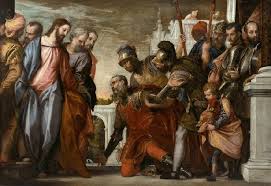
Errors in the New Testament? The Centurion's Servant


posted by Clark Bates
February 1, 2017

The Dilemma

In the Gospel According to Matthew we read of a moment in the healing ministry of Jesus that involved a centurion and his servant (8:5-13).  In this account, a Roman centurion in the city of Capernaum has a servant who is sick, presumably unto death (some translations say that the servant is paralyzed).  The centurion hears of Jesus’ ability to heal the sick and comes to the Lord in an appeal for his servant’s healing.

Most people who have spent time in church or have read through the gospels are familiar with this story because it is a demonstration of great faith.  Much is made (rightly so) about the centurion’s statement that he is not worthy to have Jesus come to his home, but that he knows Christ only needs to say that his servant is healed and it will be done (vv.8-10), but what many in the faith tend to overlook, and what many opposed to it tend to highlight, is that difference in this same account found in the Gospel According to Luke.

We find a parallel account of this same incident in Luke 7:1-10, but in this account, it is not the centurion who comes to Jesus but elders of the Jews, whom the centurion sent.  According to Luke it is the Jews who plead for Jesus to heal the servant because the centurion has done a great deal for the community (vv.3-5).  After Jesus takes a course toward the centurion’s home, several of his friends approach the Lord and only then relay the famous saying that Matthew places upon the mouth of the centurion himself (vv.6b-8).  Was it the centurion who asked Jesus to heal his servant, or was it his servants?  After all, it is often claimed, if Luke and Matthew can’t get this story straight there’s very little reason to think that they were concerned with accuracy, let alone inerrancy.

The Centurion or His Servants?


A classical approach to correcting this discrepancy is known as harmonization.  A harmonization of the gospel accounts is the process by which all four records of the ministry of Christ are collated in such a way as to create one large, overarching story.  This practice can be traced back to the mid-second century with the writing of Tatian’s Diatesseron (160-175).[1]  Harmonizations of the Gospel have been produced in recent years by A.T. Robertson, Robert L. Thomas and Vern Poythress, all seeking, just as Tatian did, to demonstrate that the gospel records correspond to one another rather than contradict.  An example of a harmonization response to this apparent dilemma is found in the work of Jack Shaffer.  In Shaffer’s account, again very similar to Tatian’s, the story of the centurion begins with the account given by Luke and the approach of the elders and servants of the centurion, but continues as the centurion himself eventually comes to meet with Jesus, delivering his famous message of faith.[2]

While it’s certainly not improbable that the events could transpire in such a way as Shaffer records, it is difficult to accept that the verbatim speech recorded by Matthew and Luke would have been used.  Given that the use of harmonization is to protect the inerrancy of the text, if the speech recorded is not verbatim, the purpose of the harmonization is still lost.  While there is certainly an appropriate place for acknowledging a harmonization in the biblical text[3], to do so here seems to be mechanical and unnecessary.

A Proposed Solution

Earlier on in this series I discussed the approach that ancient writers often implemented when recording historical, or biographical, material.  In short, ancient writers exercised a level of freedom in their cataloging that could include the omitting of material, or even using a specific literary convention that describes the action of one person acting by means of an intermediary.  Now, before the objection is raised that I’m trying to take an easy escape or creating an all-to-convenient answer to this discrepancy, we use this same convention today.  How often have we heard a news channel report that, “the President announced that. . .” but when the story cuts to the announcement, it is not the President himself, but his Press Secretary?  To make the matter deeper, often the Press Secretary isn’t even reading a statement written by the President, but by a speech writer.  In this instance, the statement, “The President announced . . .” is twice removed from the actual Head of State.  Yet we do not balk at this; in fact, we understand quite clearly that this is a figure of speech, and that the President had involvement in the process, making the announcement “under his authority”.

Both in English and in Greek there is the common use of the causative active voice.  What this means is that an action is said to take place by an individual but caused by another.  Grammarians of Hellenistic Greek regularly speak of this form of the active voice.[4]  If you recall in Mark 15:15 and John 19:1, we are told that Pontius Pilate flogged Jesus.  However, no one, especially reading in the first century, takes this to mean that the Roman prefect would have personally taken a whip and beat the prisoner.  Rather, what is meant, and immediately understood, is that Pilate caused Jesus to be flogged.  This is the causative use of the active voice in Greek Grammar.

No Gospel writer even appears to contradict Mark 15:15, but if we apply the same reasoning used there and in John 19 to the story of the centurion’s servant in Matthew and Luke, we discover a far more probable solution to this apparent contradiction.[5]  Luke’s account, is likely the more detailed and literal, given its inclusion of the various elders and servants, whereas Matthew has chosen the more literary approach by describing the visits of the centurion’s emissaries as a visit by the centurion himself.

Conclusion

For some, this explanation may seem to challenge the idea of an inerrant Scripture, but only if we restrict the definition of inerrancy to a modern standard of precision.  This would be an anachronistic method of evaluating Scripture and is the primary basis for the claims made against Scripture.  It does not benefit the church to attempt to defend Scripture with the same method used to attack it.

I would even be willing to concede that my proposed solution would be questionable if it were the only instance in the Word of God where it can be found.  However, this very same explanation can be applied to the account of the mother of James and John requesting Jesus allow her sons to sit on thrones beside him in heaven (Matthew 20:20-21/Mark 10:35-37).  In the variant account of Mark, we read that it is James and John themselves who approach the Savior.  Knowing that one of the only ways a woman in a patriarchal society could exercise power would be through her influence on adult sons, it is more likely that Mark records what actually occurred (James and John approaching the Lord), whereas Matthew records who was actually behind the request (their mother).[6] [7]

What matters above all else is that we seek to know what the authors intended when they wrote.  It is only then that we can see the divinely inspired message placed upon them.  It is commendable that others have sought to defend passages such as this in a manner that appeals to their concept of inerrancy, but we must strive to apply a method that not only corresponds to that doctrine, but does so in a way that respects the message as it was intended at the time it was written.


[1] The passage in question here is found in Diatesseron,XI,xii.

[2] Jack R. Shaffer, “A Harmonization of Matthew 8:5-13 and Luke 7:1-10,” Master’s Seminary Journal 17 (2006): 35-50.

[3] See the parable of the wicked tenants.

[4] Daniel B. Wallace, Greek Grammar Beyond the Basics, (Grand Rapids: Zondervan, 1996), 411-412.

[5] Craig L. Blomberg, The Historical Reliability of the New Testament: Countering Challenges to Evangelical Christian Beliefs, (Nashville: B&H Academic, 2016), 71.

[6] John Nolland, The New International Greek Testament Commentary: The Gospel of Matthew, (Grand Rapids: Eerdmans, 2005), 819.

[7] It would be worth noting as well that even in Matthew, Jesus’ response to the mother records the plural use of the word “you”, suggesting that it was not a single individual who had approached him.

Errors in the New Testament: Making Sense of Luke's Census


Posted by Clark Bates
January 19, 2017

“In those days a decree went out from Caesar Augustus that all the world should be registered. This was the first registration when Quirinius was governor of Syria.”

Luke 2:1-2 (ESV)

This week’s article on proposed New Testament errors involves less of an internal disagreement than a possibly spurious historical attestation.  Having just recently passed through the Christmas season, the story of Joseph and Mary’s journey to Bethlehem should be fresh in many minds.  Everyone familiar with the account in Luke are aware that the reason given for the couple’s return to Bethlehem is to be counted for a census instated by the Syrian governor, Quirinius.  The difficulty with this is that there is no recorded census of this type, at the time of the accepted birth of Christ.  In fact, the only census in recorded Jewish history even close to this timeframe is found in the writings of Josephus at a period approximately ten years too late.  So, what are we to do with information like this?  Are we to believe the account of Josephus or the account of Luke?  Of course, the ardent faithful among us will quickly affirm Luke’s account over any other, but is there any way to ratify this discrepancy in such a way that need not rely on a form of blind faith?  Let’s examine the difficulty.

The Objection


The entire objection to the Quirinian census can be summed up with two points:
  1. The kind of census Luke describes is neither recorded nor possible; and
  2. Quirinius was not governor of Syria at the time of Christ’s birth.
Much of the objections to this moment in Luke’s gospel come from an account given by the Jewish historian Josephus (37-100 AD).  In his Antiquities of the Jews, Josephus describes Quirinius as being governor of Syria from AD 6 – AD 12.[1]  This has been acknowledged by scholars, both critical and conservative, as being roughly a decade too late to align with the account in the Gospel.[2]  For some, this discrepancy confirms an error in the gospel record and no hope exists for ratification.  As per Conzelmann,

“. . . all attempts to rescue Luke from the charge of error are hopelessly contrived.”[3]
And Brown,
“. . . although Luke likes to set his Christian drama in the context of well-known events from antiquity, sometimes he does so inaccurately.”[4]

For a time, there was some hope that archaeological evidence would reveal the possibility of a joint rule between Quirinius and another co-regent, and while this hope still tends to surface in various internet defenses of Luke, the reality is that no evidence in support of this hope has materialized.[5]
The first point, that the census described in Luke is not possible, can actually be rejected fairly quickly.  Although we have no official records of all the census activities, we do know that Caesar Augustus ordered three censuses and periodic cycles of censuses did occur.  There are records of census cycles in Syria, Gaul, and Spain occurring at, or near, the birth of Christ.  The reference to Caesar’s edict may simply reflect the ongoing census activity of the empire in which every jurisdiction participated.  If a census of the size that seems to be proposed by Luke did take place, it would take years to complete. Not unlike modern government, proposals of government action often require great planning and extend for several years while being implemented.  It would be anachronistic to argue that it must move more quickly thousands of years ago than it does in our day.  In short, to assert unequivocally that a census like the one described in Luke would be impossible, when censuses of its kind are recorded as having occurred in the same century speaks more to one’s bias than factual data.

Even with Josephus’ attestation, the Roman records of that era are sparse and fractured.  It’s because of this, that each interpreter comes to varying levels of disagreement regarding the timeline of events.  Given the accuracy of Luke observed both in his gospel and the accompanying Acts of the Apostles, it would again be a form of bias to immediately reject the attestation of the gospels in favor of Josephus, who is known for errors in reporting as well.  So, what do we know?

Quirinius

Regarding the man, Quirinius, there are two basic literary sources, apart from Luke, where he appears.  The Roman historian Tacitus records some accounts of his life in Annals, and there are three inscriptions recorded at Inscriptiones Latinae Selectae, #2683, #9502, and #9503, that bear his name.  The combined information from these records show a man that rose through the ranks of government as a soldier and, later, a politician.[6]  Archaeologist William Ramsay has recorded tertiary evidence suggesting that Quirinius held a high office in the province of Syria, and minor inscriptional evidence shows him active in Asia Minor and conducting a census in Syria.[7]  Even with this information, the records indicate that Quirinius’ governorship occurred from AD 6-12, even though his entire time of service in Syria would have begun around 12 B.C., meaning he was not the governor of Syria at the time of Christ’s birth.  Who actually was governor during Christ’s birth is formally unknown.

Resolutions

So, was Luke wrong in his account?  Not necessarily.  There are presently three possible resolutions that are worth mentioning.  First, upon careful examination of the accounts in both Luke and Josephus it can be seen that nowhere is Quirinius said to be “governor” of Syria.  Of course, your immediate response will be to quote Luke 2:2 in which the English reads,

“This was the first registration when Quirinius was governor of Syria.” (ESV emphasis added)

However, the Greek word translated “governor” in most English translations is ηγεμονευοντος (hegemoneuontos), which can be translated as “govern” but quite directly means “leading” and does not demand imperial office.[8]  Luke uses this same word in Luke 22:26 in reference to the greatest of the disciples, in Acts 7:10 in reference to Joseph in Pharaoh’s court, and in Acts 14:12 to refer to Paul as the “chief speaker.”  If this interpretation were intended by the author, Luke 2:2 might read “when Quirinius held Syrian hegemony.”  Given the evidence that Quirinius was functional in Syrian government prior to his governorship in 6 A.D., and involved in taxation, it would not be incorrect to attach his name to the census during the birth of Christ.

Secondly, and possibly the more impactful possibility, is the use of the adjective “first” (Gr: πρωτη; prote).  Again, Luke 2:2 in English translations reads,

“This was the first registration when Quirinius was governor of Syria.” (ESV, emphasis added)
A careful reading of the most natural rendering above would suggest that if this was the first census there would be a series of registrations.  That being the case, the census of 6 A.D. would likely be the second census.  This census, as recorded in Josephus, caused rioting throughout the region and would have been the more notable of the two censuses.[9]  If this is the case, the second census would serve as the reference point for Luke’s account rather than the prior census (in which Joseph and Mary partook) that would have gone relatively unnoticed.

One other slight variance in this possibility worth noting is that it is within the semantic range of πρωτη to render “first” as “before.”[10]  While this would be an other-than-normal use of the word and the only time Luke uses it in this way in all of his writing, the passage would actually read, “This was the registration before Quirinius was governor of Syria.”[11]  In either case, both approaches to the text acknowledge the important role the second census undertaken when Quirinius was, in fact, governor would play in marking time for all registrations before and after it.

Third, and lastly, in an article published by the Journal of the Evangelical Theological Society, J.H. Rhoads asserted that Josephus had made an error in his reporting.  According to Rhoads, Josephus misread the sources he was using and confused similar events.  He asserts that the accounts of the census and the following revolt of Judas the Galilean are actually duplicates of earlier accounts.[12]  The mistake in this circumstance would be that Josephus incorrectly placed the census at the end of the reign of Archelaus when it actually occurred much earlier, thereby vindicating the lukan account in the Gospel.  Josephus is known to make mistakes in his reporting elsewhere, so this proposal is not without foundation.[13]

Conclusion


It would be dishonest on my part to approach a topic such as New Testament discrepancies with the flippant attitude that each one has a clear-cut answer.  In spite of our best efforts, there are still limitations to what can ultimately be known regarding the events of ancient history.  These limitations do not require us to immediately err on the side of a mistake in the gospel records, however.  Certainly, those who approach the study of Scripture from the historical-critical method discussed earlier in this series will seek to find fault more quickly than those who approach the New Testament from a belief in Inerrancy, but as there are several plausible scenarios in which this “discrepancy” can be ratified, it cannot be said to constitute an “error” in Luke, in any objective sense.


[1] Flavius Josephus, Antiquities of the Jews, XVIII, 1.

[2] Kostenberger, The Cradle, The Cross, and the Crown; Carson et al., An Introduction to the New Testament; Blomberg, The Historical Reliability of the New Testament; Brown, An Introduction to the New Testament, Conzelmann, History of Primitive Christianity.

[3] H. Conzelmann, History of Primitive of Christianity, (Nashville: Abingdon, 1973), 30.

[4] R. Brown, An Introduction to the New Testament, (New York: Doubleday, 1997), 233.

[5] Craig L. Blomberg, The Historical Reliability of the New Testament, (Nashville: B&H Academic, 2016), 60.  You can find a large listing of scholarly options to this resolution in Darrell L. Bock’s Baker Academic Commentary: Luke 1:1-9:50.

[6] In Tacitus, we read that Quirinius was awarded with a consulship for a military victory against the Homonadesians in Cilicia.  He died without an heir in Rome and was given a public funeral. Tacitus, Annals, 3.48.

[7] W.M. Ramsay, The Bearing of Recent Discovery on the Trustworthiness of the New Testament, 2nd ed. (New York: Hodder & Stoughton, 1915), 280; the inscription is known as the Lapis Venetus (#2683 above) is the funeral stone of a man who served under Quirinius.

[8] BDAG, 343.

[9] Luke also records this event in Acts 5:37.

[10] BDAG, 721.

[11] This translation is preferred by Craig L. Blomberg in his Historical Reliability of the New Testament, 60.

[12] J.H. Rhoads, “Josephus Misdated the Census of Quirinius,” JETS, 54 (2011).

[13] Josephus has been noted to mistakenly record names of the Sicarii and the order of events surrounding them, as well as biblical events.  He has incorrectly recorded the placement of public buildings and even the relationship between Germanicus and Tiberius.

Errors in the New Testament? A Matter of Chronology and Purpose


Posted by Clark Bates
January 10, 2016


Mark 8:26-29 / Matthew 16:13-16 / Luke 9:37-42


Having completed the three introductory articles to the claim that there are errors in the New Testament, especially the Gospels, we will finally turn our gaze to actual accusations of error and the verses in question.    Something that occurs quite frequently in these claims, particularly against the Gospels, is an accusation related to chronology.  It’s often argued that since gospel “X” places Jesus in “this” place at “this” time, saying “this” thing, and gospel “Y” places Jesus at “this” place at “that” time, saying an altered form of “this,” they are in error and contradict each other.  Where this accusation fails in general, is that it fails to take into account the genre of the Gospels and their relationship to ancient historiography.

Our first example of potential error is found in Matthew 16:13-16, paralleled in Mark 8:26-29 and Luke 9:37-42.  Here we find Peter’s famous confession of Jesus as Christ.  This particular example does not address a chronological difficulty per se, but does fail to take into account the genre of the Gospels. Below is an example of each passage with the differences in bold:

Mark 8:29

29 And he asked them, “But who do you say that I am?” Peter answered him,
“You are the Christ.”


Matthew 16:15-16

15 He said to them, “But who do you say that I am?” 16 Simon Peter replied, “You are the Christ, the Son of the living God.”

Luke 9:20

20 Then he said to them, “But who do you say that I am?” And Peter answered, “The Christ of God.”

Seeing these examples side by side, the accusation often follows that we have three separate accounts of Jesus speaking but with Peter replying in three different ways.  If inerrancy can truly be applied to the text how could the authors of the Gospels mistake Peter’s response?  For that matter, which response is the correct one?

The reasons why we find different subtleties in this passage are many, but I’d like to focus on those that are primary.  First, we have to acknowledge the gap of time between the culture in which this was written and the culture from which we are reading.  For those with a critical eye, the need for exactness when recording a supposedly historical occasion is paramount.  Certainly, we can acknowledge this in cases such as obtaining witness testimony or even in recording current events, but to assume that what is considered paramount to a modern audience in the 21st century is, or even should be, paramount to an agrarian audience in the 1st century would be a type of temporal elitism and would not comport with what is known of all ancient biography.

It is widely acknowledged that the culture from which the Gospels arose utilized an oral transmission method of communicating important stories.  That being said, it should be acknowledged that there are several reasons to believe that the Gospels themselves were written with the intent of being read aloud which suggests that the culture was not exclusively oral.[1]  But, in keeping with a culture that transmits important information orally, including biographical narrative, it is the primary focus of the author or speaker to emphasize main features or main points rather than word-for-word exactness.  Paraphrasing a speaker's dialogue while retaining the intent was often sufficient.

A common practice that can be seen in the Synoptic Gospels is one of Condense, Summarize, and Paraphrase.[2]  There are pragmatic benefits to such a practice to be sure, but this was primarily used to direct the narrative along the course of the authors intended message to a particular audience.  For instance, Matthew contains more Old Testament references than the other Synoptic Gospels and spends considerable time comparing the message of Christ with the Law.  His audience seems to have been primarily Jewish and, as such, the purpose of Matthew would be the affirmation that Jesus of Nazareth was the promised Jewish Messiah.[3]  Note that in Matthew we find the decidedly Jewish phrase “the Living God”, used throughout the Hebrew prophets to separate belief in Yahweh from belief in the various pagan deities.[4]

In the Gospel of Mark, we find a rapid movement through the major moments of Jesus’ ministry.  It is the shortest of the Gospels and centers much of its purpose on the crucifixion and an apologetic toward non-Christians that Jesus was in fact the Son of God in spite of the cross.  You’ll notice that in Mark’s narration of the above event, Peter’s answer is brief and to the point.  It is in keeping with the intention and pace the author has set for his writing.

Lastly, the Gospel of Luke is expressly written as a defense of Christianity to a specific individual (Theophilus).  The audience is presumably not Jewish but familiar with the basic message of Christ.  While Luke is arguably the most detail-oriented of the gospel writers, his need to emphasize the Messiahship of Jesus to a gentile would be greatly diminished, thus you read merely, “The Christ of God.”

While much is made of this apparent error or contradiction, very little is ever acknowledged from the critic regarding the area of agreement.  Even a quick, cursory reading of each text reveals a confession that Jesus is the Christ.  Each Gospel cited confirms that Jesus of Nazareth was proclaimed to be the Christ or Messiah by the apostle Peter in the presence of witnesses.  Can this really be considered an error with such a large agreement?  Certainly, this might be considered a “variant” in the sense that the answer varies slightly from one text to the next, but as a challenge to inerrancy, at least as inerrancy has been explained in the introduction, it certainly is not.


The Three Temptations of ChristMatthew 4:1-11 / Luke 4:1-13


Another quick example of a perceived error due to an uninformed focus on chronology over intent is the three temptations of Christ in the wilderness found in Matt. 4:1-11 and mirrored in Luke 4:1-13.  For those concerned with proper chronology, this passage presents a problem.  While Matthew orders the temptations of Christ as “Stones to Bread,” “Leap from the temple,” then “Taken to a high mountain,” Luke presents an order that reverses the final two temptations:


Matthew 4
1.    And the tempter came and said to him, “If you are the Son of God, command these stones to become loaves of bread.”
2.   Then the devil took him to the holy city and set him on the pinnacle of the temple and said to him, “If you are the Son of God, throw yourself down,
3.   the devil took him to a very high mountain and showed him all the kingdoms of the world and their glory.


Luke 4
1.         The devil said to him, “If you are the Son of God, command this stone to become bread.”
2.       And the devil took him up and showed him all the kingdoms of the world in a moment of time,
3.       And he took him to Jerusalem and set him on the pinnacle of the temple and said to him, “If you are the Son of God, throw yourself down from here,

If chronology is paramount, the question of course becomes, “Which one has the correct order?” but it has already been demonstrated that the authors of the Gospels were not focused on presenting a chronological narrative, but a narrative that emphasizes those aspects of Jesus’ ministry that best suit the purpose of the individual gospel and the intended audience for which it was written.

When we read Luke, an often-overlooked theme in the gospel is one of Jesus as the high priest.  The author opens his gospel with the high priest Zechariah being struck deaf and mute by the angel of the Lord for doubting his message.  As a result, the high priest was unable to perform the closing function of lifting his hands to heaven before the people and giving the blessing.  At the close of Luke’s gospel, we read that just prior to Jesus’ ascension He lifts His hands to the heavens and blesses His people (Lk. 24:50), fulfilling the high priestly function left open by Zechariah at the opening.  Because of this, it would be understandable that Luke would seek to place the temptation at the temple last and most memorable in his account.

This is not an issue of whether either gospel is speaking truth, for both contain the same information.  It is a debate of timing with the misconception that order overrules intent.  We will continue to identify and examine other variations found within the gospel narratives in the coming articles, but for now may it be said that no error has been found here.


[1] Justin Martyr (100-165 AD), writing in the early to mid-2nd century, wrote in his First Apology, 67, “And on the day called Sunday, all who live in cities or in the country gather together to one place, and the memoirs of the apostles or the writings of the prophets are read, as long as time permits; then, when the reader has ceased, the president verbally instructs, and exhorts to the imitation of these good things.” Suggesting that the practice of Christian worship, as far back as the early 2nd century was to have the Scriptures read aloud. This assertion by Justin Martyr is supported even further by the existence of markings on various papyrii (P66 particularly) that contains specific markings and spacing that would aide someone who would be reading the document aloud.

[2] Lest anyone really believes that Jesus’ sermon on the mount really only took 10 minutes or less (the time it would take to read what is written) to recite, or that the words of Jesus are limited to what is contained within the Gospels, contrary to the testimony of John 21:25.

[3] It would be unfair to the Gospel of Matthew to limit his purpose to just this, but many of the other sub-themes can be gathered under this central tenet.  See various New Testament Surveys for more information, including Carson and Moo, An Introduction to the New Testament, or Andreas Kostenberger et al., The Cross, the Cradle, and the Crown.

[4] See Isaiah 37 ,Jeremiah 10, and Daniel 6 for examples.

Errors in the New Testament? How to Interpret the Gospels


Posted by Clark Bates
December 26, 2016

“I chose a passage in Mark 2, where Jesus is confronted by the Pharisees because his disciples had been walking through a grain field, eating the grain on the Sabbath.  Jesus . . . reminds them of what David had done . . . ‘When Abiathar was the high priest.’. . . One of the well-known problems of the passage is that when one looks at the Old Testament passage that Jesus is citing (1 Samuel 21:1-6), it turns out that David did not do this when Abiathar was the high priest, but, in fact, when Abiathar’s father Ahimelech was. . . the Bible is not inerrant at all but contains mistakes.”[1]

  • Bart Ehrman, Misquoting Jesus

In the above account of Dr. Ehrman, we read how he began his descent from Christian evangelical to skeptical agnostic.  In the introduction to his book Misquoting Jesus he goes on to relate how he desperately sought to harmonize this discrepancy, only to have his professor point out that it was more likely that Mark just “made a mistake.”  From this epiphany, Dr. Ehrman explains that he began to see many errors in the New Testament, ranging from minor variations to major adjustments.  It was here where his faith floundered.  Dr. Ehrman has since gone on to teach New Testament studies at the University of North Carolina at Chapel Hill, expressly focusing his time on repeating this event in the lives of every Christian student he oversees.

Situations such as this and the flurry of internet support that they garner have furthered the hyper-skeptical attitude of a generation that cannot be ignored.  In the opening two articles of this series I sought to explain what is properly meant by the doctrine of inerrancy in regards to the Bible and the approach to textual criticism used by scholars like Dr. Ehrman, known as the historical-critical method.  This article serves as the last introductory article to the series and will discuss how the Gospels themselves should be categorized as literature.  This is vitally important for the genre of a writing determines the guidelines regarding how it can and should be interpreted.


The Genre of the Gospels


Unfortunately, modern readers struggle immensely with how to properly interpret the Gospels.  The primary reason for this is that we lack a modern parallel by which to cross-reference.  The Gospels do not read like a modern history book, novel, news article, or letter, and this difficulty is only exacerbated by the all-too-common approach given to them in modern Christianity.  What I mean by this, is that most readers subconsciously approach the texts as if they were fables.  Like most fables, the stories of the Gospels are very old, and, as in the case of most fables, Americans are taught these stories as children.  As children, we’re taught that there is a moral message behind these Bible stories, not unlike Aesops’ “Tortoise and the Hare” or “The Boy Who Cried Wolf” and, as a result, the underlying emphasis transmitted is that what is important is not whether these events actually happened but what moral lesson is this story trying to teach.  Many of us have sat under a sermon or read a devotional that spent much of its time explaining that Jesus stilling the storm on the Sea of Galilee was emblematic of how Jesus could “still the storms of our own life”.  Unfortunately, the search for the moral of a story often results in the reader missing the real point of the narrative.[2]

In addition to this practice, matters are slightly complicated given that nowhere in the New Testament are any of the four accounts of Jesus’ ministry referred to as “gospels”.  I’ve written in other articles that the titles we commonly attach to the four gospels were most likely attached to the documents somewhere near the end of the first century or early on in the second.  Justin Martyr (100-165 AD) was the first to coin the term “gospel” when referring to the canonical accounts of Jesus’ ministry, and it was likely due to Mark’s prominent use of the word (ευαγγελιον) throughout his account (1:1, 14 et. al.) that led to its use as a literary designation.[3]

During much of the twentieth century, the study of the Gospels was dominated by the branch of the historical-critical method known as form criticism.  Aspects of this approach consisted of identifying the gospel literature as parable, proverb, miracle story, or the like, and tracing both their dependence on other materials and use of oral transmission to the point at which they were transcribed.  K.L. Schmidt sought to classify them as popular literature so that they might be viewed as distinct from the more literary biographies, prevalent in the Greco-Roman world, whereas C.H. Dodd saw them as mirroring early Christian preaching (called kerygma in most scholarly work) and as such could only be considered “unique” among categories.

Currently, in spite of its continued promulgation on the popular circuit, form criticism has mostly ceased to be considered as an effective means to understand the text of Scripture.  Given more evidence, the re-occurring designation of the Gospels as biography seems to be correct.  Certainly, the biography of the ancient world does not look like a 21st century biography, but at its time the genre of biography was very broad, encompassing considerably diverse works.[4]  Even modern literary critics point out that genre does not impose a rigid set of requirements but a flexible set of expectations.  It is also pointed out that there is no such thing as a truly “unique” book, for if a book is to be understood at all, it must conform to certain generic conventions.  While the gospels lack the literary pretensions of most ancient biographies, they also contain a mixture of teaching and action-oriented work that separates them from other writings.  In some ways, Justin Martyr’s reference to them as “memoirs” may also be an apt description given the eyewitness nature of each record.


How to Read the Gospels


Whether a textual critic or a student of the Word, there are two types of reading that should be practiced when engaging with the gospels: Vertical Reading and Horizontal Reading.  Vertical reading is that which examines each gospel independently of the others.  The reader should seek to identify theological themes in the introduction and closing, as well as programmatic statements that tell the reader what the message of the book will be.  Most scholars see an example of such a statement in Matthew 1:21 in which the angel narrates the mission of the Christ-child.  I should note here that recognizing that the authors of the New Testament, the gospels in particular, wrote with an intentional theological purpose does not render the texts ahistorical or unreliable.  Every author writes with an intended purpose, and it is up to the reader to discover that purpose and, in the case of historical writings, identify the place, time, and events in history within which the writing occurred.

The approach known as horizontal reading or, “comparative analysis” compares the Gospels and contrasts the differences among them while also determining which Gospels may have used the work of another.  We can, and do, recognize that there are differences between the Gospels without agreeing that there are discrepancies, this is a necessary distinction.  Many scholars address these differences as the “Synoptic Problem”, however identifying it as such presumes that it is, in fact, a problem to begin with.  What often occurs with men like Ehrman is the differences are exacerbated at the expense of the similarities, which are remarkable.  Using the horizontal reading approach, it is possible to verify, to an even higher degree, the historical accuracy of the texts.  As Blomberg states,

“Harmonizing the Gospels and analyzing their redactional distinctives are not contradictory but complementary methods.  With a full appreciation of all the variations in wording between parallel accounts, not one example has come to light which demands an abandonment of belief in the Gospel’s accuracy, provided that the accuracy is measured by standards of precision appropriate to the cultures and expectations of the original authors and their audiences.”[5]
When all is said and done, it is my belief that, properly interpreted, the Gospels contain no contradictions.

What About the Mistake in Mark 2?


So what of the “mistake” discovered by Dr. Ehrman so many years ago?  Can we explain this error in naming the high priest?  Before answering that question, I’d like to point out something.  When one is raised in a theological tradition, like Ehrman, that requires one to accept a definition of inerrancy that makes no accounting for minor textual variants or scribal errors without rejecting the entirety of Scripture, they are on a short track to becoming a self-fulfilling prophecy.  While I believe that Dr. Ehrman has revealed in later statements that he was facing deep theological doubts for some time prior to this moment, he was also, unfortunately, set up for failure with such teaching.

Also, if a textual critic finds an error similar to what Dr. Ehrman has in Mark 2 in another ancient document he would certainly not abandon the entire text to the flames!  Why then would it follow that because the high priest is recorded incorrectly in one place of the New Testament that the entire Gospel record must be abandoned, or seriously doubted?  Of course, Dr. Ehrman would state the errors do not end there, but it is symptomatic of hyper-skepticism such as his that all-or-nothing verdicts must be the baseline for examining Scripture, regardless of the inconsistent application of this method to all other documents in antiquity.

That being said, is there a way to reconcile this discrepancy?  I would say there is, and it involves the Vertical Reading method spoken of above.  The passage in question is Mark 2:23-27, particularly focusing in on verse 26.  At this point, in the Greek, Mark uses the phrase, επι Αβιαθαρ αρχιερεως (epi Abiathar arkiereos), which is not the standard method of identifying time, but has been rendered in English, "in the time of Abiathar the high priest.".  Directly translated, this would have to be rendered, “upon Abiathar (the) high priest” which makes no sense.  Mark uses the preposition επι 51 times throughout his Gospel and at only 18 times does it occur with a genitive (as it does here).  Of the 18 occurrences, 16 can be translated with the standard renderings.  Of the two remaining occurrences, guess which verse is included?  That’s right! Mark 2:26; the other verse is Mark 12:26 in which Mark renders the phrase, “have you not read” in the book of Moses, as επι του βατου.

Given that none of the standard readings would be applicable, the translators see fit at this passage to reference the Old Testament story of Exodus 3:4 as “have you not read in the passage about the bush.”  Using the vertical reading method and examining the Gospel of Mark on its own merit, it makes sense to use the same translation method found here in Mark 12, back in Mark 2.  If we follow this logic it means that what Jesus is referencing in Mark 2:26 is not merely the 6 verses of 1 Samuel that Dr. Ehrman suggests but a much greater segment of the Hebrew Scriptures.  Abiathar is a much more significant character than Ahimelek , mentioned 28 times in the Old Testament over the former’s mention only 13 times.[6]  The temporal use of επι (“in the time of”) is considered extremely rare.[7]  Therefore, a more consistent interpretation of Mark 2:26 would read, "in the passage/story/account about Abiathar, the high priest."   In all likelihood, had the King James Version of the Bible not employed this variant form, no other translation would have followed.[8]


Conclusion


While the above defense may be a little difficult to follow for some, it flows from a consistent text-critical approach.  Allowing the Gospel to define its own terms resolves the error that undid Ehrman’s faith.  In the coming articles I will seek to demonstrate, using the same methods, that many of the “errors” enlarged by the hyper-skeptical crowd can be resolved without special pleading, but by simply employing a consistent application of proper interpretational methods.


[1] Bart Ehrman, Misquoting Jesus: The Story Behind Who Changed the Bible and Why, (San Francisco: Harper, 2005), 9.
[2] Andreas J. Kostenbgerger, L. Scott Kellum, and Charles L. Quarles, The Cradle, The Cross, and the Crown: An Introduction to the New Testament, (Nashville: B&H Academic, 2016), 193.
[3] Justin Martyr, First Apology, LXVI, “For the apostles, in the memoirs composed by them, which are called Gospels . . .”
[4] D.A. Carson and Douglas J. Moo, An Introduction to the New Testament, (Grand Rapids: Zondervan, 2005), 114.
[5] Craig L. Blomberg, Interpreting the Parables, (Downers Grove: InterVarsity, 1990), 130.
6 Craig L. Blomberg, The Historical Reliability of the New Testament, (Nashville: B&H Academic, 2016), 67.
[7] BDAG, 367.
[8] In almost all modern translations you will find the alternative rendering, defended here, in the footnotes.


Errors in the New Testament? The Historical-Critical Method


Posted by Clark Bates
December 10, 2016


“The scribes changed scripture in ways that we do not. . . . they, like us, were trying to understand what the authors wrote while also trying to see how the words of the author’s texts might have significance for them, and how they might help them make sense of their own situations and their own lives.”

Bart Ehrman, Misquoting Jesus: The Story Behind Who Changed the Bible and Why, (San Francisco: Harper, 2005), 218.

This is the second article in our series on errors in the New Testament.  In the last article, we began by commenting on certain presuppositions and methodological choices made by textual critics, and the need to identify these prior to discussing any alleged contradictions or errors.  It’s important to know what each person, secular or believer, bring with them into the room prior to examining and interpreting Scripture.  In acknowledging these starting points, it becomes possible to appreciate why someone like Bart Ehrman might examine the same text as someone like his mentor Bruce Metzger, and yet both come to completely different conclusions.

Having discussed the Christian doctrine of inerrancy in the last article, it should be clear that for evangelicals, the approach to Scripture is necessarily theological.  We believe that the God that is, is a God who has communicated with His creation through the writings of the Old and New Testament.  This being the case, the “words of God” are imbued with the attributes of God, i.e. without error.  This can only be said of the original autographs, in a sense, however the multifocality of transmission and accuracy of the manuscript evidence provide us with an unparalleled confidence that the “original text” contained in the original autographs has been faithfully preserved to the present day.  It is because of this conviction that the doctrine of inerrancy can, and is, still maintained in spite of the lack of a physical, original document.

Higher Criticism and the Historical-Critical Method


This article will now discuss the methodological approach that has fueled much of the criticism in the last two centuries.  An approach that has come to be known as higher, or historical, criticism.  These two terms are often used interchangeably, but what distinguishes historical criticism from the evangelical methods of the past is that it, “asserts that a reality is uniform and universal and that one’s present experience supplies an objective criterion for determining what could or could not have happened in the past.”[1]

While scholars like Bart Ehrman regularly implement the historical-critical approach to New Testament studies and presently hold the mantle of most-notable New Testament critic, this process came about initially by the work of German theologian F.C. Baur.  Bauer brought more than a little philosophical naturalism (i.e. he was averse to admitting any appeal to the supernatural in any historical questions), and he advanced reasons for dating the various New Testament books on the assumption that his re-creation of early church history was correct.  This early history, he claimed, saw the church emerge as a minor Jewish sect, then a major Jewish sect, then a peculiar Jewish sect in that it was admitting Gentiles under a variety of conditions; eventually it broke from Judaism to take on a life of its own.[2]


Developing the historical-critical method from Bauer’s writing, many negative overtones arose.  The combination of a rigidly developmental reconstruction of early church history and a fairly radical naturalism meant that the New Testament documents could not be thought of as revelatory in any proper sense. According to higher criticism, they give evidence not only of historical and theological development but of something more: the various layers prove historically interesting but in some ways mutually incompatible.  For the same reason, they could not be viewed as theologically binding.

According to higher criticism, all religious movements and the documents they generate are themselves shaped by other religious movements and documents, whether the new ones merely taken over by antecedent material, or modify it, or react against it. . . historical criticism is a deployment of critical reason that refuses to appeal to supernatural causes to account for the documents that make up the Christian Bible.[3]  Contrasted with what has been said, both in the last article and above, the common approach of scholars in academia toward the New Testament is anthropological, whereas the approach of the modern evangelical (especially those holding to inerrancy) is theological.  This makes all the difference.

While it is commonly asserted, and rightly so in many cases, that higher criticism often is associated with a destructive undermining of biblical authority rather than an objective analysis and evaluation of the biblical literature, it should be noted that there are some aspects of the historical-critical method that have benefited evangelical scholarship.  For instance, we are far more aware of the complexities of synoptic relationships.  Through careful evaluation of the cultural, literary and textual styles within which they occurred and engaged, we are more sensitive to the individual emphases and nuances of each canonical gospel.  Tempered use of the historical-critical method has grown the evangelical church, refusing to allow us to read the Gospels and preach them as if they came to us in a tight “Harmony of the Gospels” instead of what they are: individual books, each with distinctive accents.  If we as evangelicals are serious about truly understanding the word of God as it has been given us, and desirous to truly know the message it endeavors to relay, we must embrace the process of examination and use it in a manner that glorifies the Author of Scripture.  To quote G.J. Wenham,

“The evangelical theologian is compelled to investigate the human means that God employed in revealing his nature, purposes, and demands to individuals and groups.”[4]


Certainly, the practice of higher criticism has come to bring negative connotations to the Scriptures.  It’s most dangerous aspect is the atomizing of individual texts to such a degree that any larger message becomes indiscernible.  Surely it cannot be denied that there is a clear level or interdependence among the synoptic gospels, with Luke admittingly using source materials and Matthew possibly borrowing from Mark.  2 Peter, clearly borrows from Jude, or vice versa depending on which might be dated first, but this does not, as men like Bauer and Ehrman might suggest, leave the thoughtful reader with only two alternatives: abandon any search for meaning in texts, which is tantamount to abandoning reading itself, or find meaning in the interplay between the reader and contradictory ideas sparked by a text.

Conclusion


“Those with a confessional stance toward the New Testament must engage both with the text of Holy Scripture and with the way it is discussed in their own generation, bearing in mind some of the long heritage that has gone before.”[5]  But to treat each book of the New Testament separately is absurd, because each book provides too little information to enable an interpreter to reconstruct the entire theology of its author.  While Bauer’s work remains influential to some and was very influential within a few decades of its time, not all German scholars agreed with his approach.  Adolf Schlatter recognized the historical nature of the New Testament documents, but also that they insisted that God had acted in history and therefore that a commitment to philosophical naturalism could not deal fairly with the evidence.[6]

So too must modern day Christian scholars acknowledge, as Blomberg stated above, that a great history of circumstances and styles have been used by God to interpret the message of the New Testament and the text cannot be divorced from this, but so too must we see that what is communicated finds its origin in divine inspiration.  As this series continues, it will become patently obvious that many of the objections raised to the New Testament in light of existing discrepancies come from the anthropological view of Scripture, steeped in the historical-critical method, but they are not without answer.  The final, introductory article in this series will address the type of literature which should classify the Gospels as a means of understanding potential errors and address the first of several alleged discrepancies in the New Testament.


[1] R.L. Schultz, “Higher Criticism,” Evangelical Dictionary of Theology, ed. Walter Elwell, (Grand Rapids: Baker Academic, 2001), 555.
[2] D.A. Carson and Douglas J. Moo, An Introduction to the New Testament, (Grand Rapids: Zondervan, 2005), 49.
[3] Carson, New Testament, 50.
[4] G.J. Wenham, “Place of Biblical Criticism in Theological Study,” Themelios, 14/3, 87.
[5] Craig L. Blomberg, “Where Should Twenty-first Century Evangelical Biblical Scholarship be Heading?” BBR 11, (2001):171.
[6] Adolf Schlatter, Die Theologie des Neuen Testaments, (Stuttgart: Verlag der Vereinsbuchhandlung, 1909-10).


Errors in the New Testament? An Introduction to Inerrancy


Posted by Clark Bates
December 4, 2016

'The evangelists were such unskilled men, not only in worldly matters, but also in the divine scriptures, that they attributed the testimony, which had been written elsewhere, to the wrong prophet.'

Porphyry as quoted by Jerome in his Commentary on Matthew

“In Matthew, Jesus declares, “Whoever is not with me is against me.” In Mark, he says, “Whoever is not against us is for us.” Did he say both things? Could he mean both things? How can both be true at once? Or is it possible that one of the Gospel writers got things switched around?”
― Bart D. Ehrman, Jesus, Interrupted: Revealing the Hidden Contradictions in the Bible & Why We Don't Know About Them

Anyone reading this blog may be familiar with Dr. Bart Ehrman, but undoubtedly fewer of you would be familiar with Porphyry the Neoplatonist.  I include both merely to demonstrate a point that challenges to the New Testament and accusations that the Gospels in particular contain irreconcilable discrepancies is not new.  The arguments of Ehrman were made as early as the 4th century, and while many sensationalists seek to make these difficulties some form of new revelation that should destroy the Christian faith, the reality is that, just as the writer of Ecclesiastes stated, “There is nothing new under the sun.”

This article begins a new series covering difficulties within the New Testament record.  This series cannot be exhaustive, given that alleged difficulties range from the smallest change in wording to complete misrepresentation of history, but I will seek to address the most common or most pressing discrepancies faced by textual critics and abused by skeptics.

Before we can have a clear discussion on such discrepancies we must address the presuppositions that often follow for those defending the Scriptures and for those seeking to find fault.  No one approaches textual criticism of the Bible from a completely neutral position, therefore it’s important that we acknowledge the guiding principles that undergird our reasons for fighting this fight.  For the purposes of this series I want to examine the Christian doctrine of inerrancy, the historical-critical method utilized by most skeptical critics today, and the nature of historical recording in the Ancient East.  This article will focus on the Christian doctrine of Inerrancy.


Inerrancy Defined

In 1978, more than 200 evangelical leaders collaborated to put in writing a formal statement on the belief in the inerrancy of the Christian Scriptures.  The resulting statement was this:
  1. God, who is Himself Truth and speaks truth only, has inspired Holy Scripture in order thereby to reveal Himself to lost mankind through Jesus Christ as Creator and Lord, Redeemer and Judge. Holy Scripture is God's witness to Himself.
  2. Holy Scripture, being God's own Word, written by men prepared and superintended by His Spirit, is of infallible divine authority in all matters upon which it touches: it is to be believed, as God's instruction, in all that it affirms: obeyed, as God's command, in all that it requires; embraced, as God's pledge, in all that it promises.
  3. The Holy Spirit, Scripture's divine Author, both authenticates it to us by His inward witness and opens our minds to understand its meaning.
  4. Being wholly and verbally God-given, Scripture is without error or fault in all its teaching, no less in what it states about God's acts in creation, about the events of world history, and about its own literary origins under God, than in its witness to God's saving grace in individual lives.
  5. The authority of Scripture is inescapably impaired if this total divine inerrancy is in any way limited or disregarded, or made relative to a view of truth contrary to the Bible's own; and such lapses bring serious loss to both the individual and the Church.

In addition to the summary points above, the body of the Statement says this, "Scripture in the original manuscripts does not affirm anything that is contrary to fact".  This is an important factor, given the controversy of King James Onlyism in the early 1980’s, and it seeks to deflate any idea that a particular translation in any language can be deemed “without error”.  However, this point has also bolstered skeptical controversy in that, if only the original manuscripts of Scripture can be deemed inerrant, and we do not possess the originals, to maintain any plausible position on inerrancy is impossible.  In the words of Bart Ehrman:

“how does it help us to say that the Bible is the inerrant word of God if in fact we don’t have the words that God inerrantly inspired, but only the words copied by the scribes—sometimes correctly but sometimes (many times!) incorrectly? What good is it to say that the autographs (i.e., the originals) were inspired? We don’t have the originals! We have only error-ridden copies, and the vast majority of these are centuries removed from the originals and different from them, evidently, in thousands of ways.”[1]

So, what can be said in response to this, very legitimate, concern?  To begin with, we should clarify what is meant by “originals” and even “Bible”.  By “Bible”, inerrantists like myself are referring to a collection of books or Scriptures, NOT a physical document containing those books.[2]  I would recommend that using the term “Scriptures” over “Bible” provides more clarity when having this discussion with others.  This is because, in modern parlance, when you say “Bible” the first thought is of whatever translation one might have on their bookshelf, and even inerrantists affirm that the modern translations (all of them) contain errors.

Next, by “Original” it would be best to decide what noun should be used.  In the Chicago Statement, the doctrine refers to the original manuscripts, and of course this is where skeptics like Bart Ehrman, Eldon Epps, Helmut Koester, and others find much of their ammunition.  However, in the time of Matthew Henry, he spoke of the “originals” in regards to the text of Scripture with ease.  Of course, Henry didn’t possess the originals anymore than we do today, but felt confident enough in the texts in front of him to refer to them as containing the “original”. It is along this line that, while I accept the statement that the original manuscripts are inerrant, it would be best served in discussion to say that in addition to the original manuscripts being inerrant, so too is the “original text”.

What’s the difference?  Returning to Ehrman’s words, he claims that “we don’t have the originals!”[3]  But what Ehrman is referring to is the original manuscripts, and he is correct in stating that we don’t have them.  However, this is not to say that we don’t possess the original text.  By way of example, if John intended to write, or have written, the phrase, Εν αρχη ην ο λογος . . . (In the beginning was the word . . .) and what we find in existing Greek texts is Εν αρχη ην ο λογος then what we have is the original text!  It is incumbent upon Christians to understand that by inerrant “originals” or even “autographs” as it is used by some, what is not meant is a physical document or actual manuscript, but the words found within them.  Therefore, when the sequence of words found on the original manuscript is copied onto another manuscript, it does not become less inspired or inerrant simply because it has been copied.

Now having clarified what is meant by “Bible” and “original” it can be better understood how a Christian can hold to a doctrine like biblical inerrancy while simultaneously acknowledging the existence of discrepancies within the manuscripts.  Because of this need for clarification, it would be valuable to consider the doctrine of inerrancy in this way:

“Inerrancy is the view that when all the facts become known, they will demonstrate that the Bible in its original autographs and correctly interpreted is entirely true and never false in all it affirms, whether that relates to doctrine or ethics or to the social, physical, or life sciences.”[4]

This definition provides a more realistic and humble recognition of the limitations we possess.  As was stated by Ehrman, we do not have the original manuscripts, therefore we are tangibly limited in the ability to accurately affirm error as much as the skeptic may claim that we lack the ability to claim inerrancy.  However, it acknowledges from the outset that the doctrine of inerrancy is one of theology, not epistemology.  If a Christian is to rightly accept the words of 2 Timothy 3:16 (which are not textually disputed), that “All Scripture is god-breathed. . .” then the words contained within the original text is the very expression of the nature of God.  If God is without error, then so too must His word be in all that it affirms.  And as has been revealed above, there is no reason to believe that the “original text” of Scripture has not been faithfully transmitted to us through the existing manuscripts.


Conclusion


This opening point is important to remember as we highlight various discrepancies found within the text and inflated by much of skeptical criticism today.  In the next article, I’ll discuss the historical – critical method utilized by much of the academy today, its benefits, and how it effects the manner in which modern textual critics receive and interpret biblical discrepancies.


[1] Bart Ehrman, Misquoting Jesus: The Story Behind Who Changed the Bible and Why, (San Francisco: Harper Collins, 2005), 7.
[2] Peter J. Williams, “Ehrman’s Equivocation and the Inerrancy of the Original Text,” The Enduring Authority of the Christian Scriptures, ed. Don Carson, (Grand Rapids: Eerdmans, 2016), 392.
[3][3] Ehrman, Jesus, 7.
[4] P.D. Feinberg, “Inerrancy,” Evangelical Dictionary of Theology, 2nd ed. (Grand Rapids: Baker Academic, 2001), 158.


Who Wrote the Book of . . . Revelation?


Posted by Clark Bates
November 28, 2016

This is the last in our series on New Testament authorship.  Over the last several months we have sought to discuss the books of the canon which are most contested in the realms of modern academia.  In each article, the opposition has been contrasted with the case for traditional authorship, and such is the nature of this article.  The book of Revelation was the last to be included in the formalized canon of the New Testament and has created no little amount of perplexing interpretive issues for centuries.  It should not be surprising then that its authorship has come under great scrutiny.  In what follows, the main objections to traditional authorship will be presented with responses in favor of traditional authorship and the additional external evidence surrounding the book of Revelation in the early church.

Arguments Against Apostolic Authorship


Most who reject the traditional authorship of Revelation fall into the same reasoning as Dionysius, Bishop of Alexandria in the mid-third century, who felt that the author was a John other than the apostle.  First, there is the lack of overt apostolic claims.  The author, it is reasoned, could not be an apostle given that he never claims to be such, never alludes to gospel events, and never claims a special relationship with Christ.  Much is also made of the seemingly separate but significant role the author places on the apostles, not numbering himself among them (Rev. 18:20; 21:14).
In response to the first objection regarding the lack of apostolic claims, the identification of “John” as author without an apostolic qualifier has led to centuries of disagreement on the part of scholars.  It is true that he never identifies himself as the “apostle”, but simply calls himself “slave” (1:1), “prophet” (1:3;22:9), and one amongst his “brothers the prophets” (22:9).[1]  That being said, of the books believed to be authored by the apostle, Revelation is the only text among them that carries an explicit declaration of authorship.  While he may not reveal more, the author identifies himself as “John the slave of (God)” (Rev. 1:1b), exiled on the island of Patmos (1:4,9), and for this reason it is largely accepted that the book is written by a particular “John” rather than a pseudonymous author in the way it is suggested of several Pauline Letters.

Given this information there are only a few potential possibilities:
  1. John the apostle
  2. John the elder
  3. John Mark
  4. John the Baptist
  5. Cerinthus, Gnostic theologian of the third century
Working from the last to the first, regarding Cerinthus, we possess no information concerning this early sectary which reaches back to his own times. The first mention of his name and description of his doctrines occur in Irenaeus[2] (c. AD 170).  Cerinthus was an Egyptian, and if not by race, a circumcised Jew. The exact date of his birth and his death are unknown, and none of his writings of any kind are extant.  What can be known from early recordings regarding Cerinthus' doctrines is that he admitted one Supreme Being; but the world was produced by a distinct and far inferior power. Yahweh is not responsible for creation but the angels have both made the world and given the law.  The Jewish law was most sacred, and salvation to be obtained by obedience.

According to Cerinthus, Jesus was mere man, though eminent in holiness. He suffered and died and was raised from the dead, or, as some say Cerinthus taught, He will be raised from the dead at the Last Day and all men will rise with Him. At the moment of baptism, Christ or the Holy Ghost was sent by the Highest God, and dwelt in Jesus teaching Him, what not even the angels knew, the Unknown God. Cerinthus believed in a millennium which would be realized on earth previous to the resurrection and the spiritual kingdom of God in heaven.  Only his disciples claimed that Cerinthus authored the book, and even then, it was not on the basis of historical considerations but theological ones.  With so little supporting attestation, there is very little weight to place upon this suggestion.

The only author to argue in favor of John the Baptist as author of the apocalypse is Ford, who believed that Revelation was compiled in three stages.  The first being chapters 4-11, recorded by John from visions he received prior to the ministry of Jesus; second, chapters 12-22 by a disciple of the Baptizer’s before A.D. 70; and third, chapters 1-3, by an unknown final editor.[3]  No scholars have taken up Ford’s endeavor however, given the difficulty of defending how a book existing on such a periphery of Christianity could make its way into the Canon.
Regarding John Mark, Dionysus the Great, bishop of Alexandria, once thought it to be authored by him and is still considered the progenitor of much of the dissenting views in current scholarship.  That being said, it is recorded by the church historian Eusebius, that the Bishop came to reject such a position based on the lack of historical evidence that John Mark ever traveled to Asia.[4]  This leaves us with John the apostle, John the elder, another John, or a pseudonymous author.

Given the author’s reference to himself simply as “John” without qualifier, it would seem that he was a well-known figure in Ephesus at the time of the writing.  Early church tradition places John the apostle in exactly this position near the end of his life, making him a more likely candidate than an unknown John.[5]  The author also presents himself with a level of humility, preferring to call himself a servant of God or Christ (1:16:15; 7:3) and a brother (1:9), and even a partner with his readers (12:10;19:10; 22:9), a characteristic not unlike the author of the fourth gospel recognized only as “the one whom Jesus loved.”

The linguistic and stylistic clues within the text strongly suggest that the author was a Jewish Christian, originally from Palestine.[6]  R.H. Charles affirmed one certainty regarding the author of Revelation was that he was a Palestinian Jew from the region of Galilee, based on two observations: 1.  The vast multitudes of solecisms (apparent grammatical incongruity) and unparalleled idiosyncrasies of his Greek reveal a Semitic syntax, and 2.  John was a prophet who wrote and apocalypse.[7]  Because of this, and the external evidence that will be presented later, there is more reason to accept apostolic authorship over other possibilities.

A second objection raised is that the level of differences between the fourth Gospel and the book of Revelation are alleged to be insurmountably substantial.  The Greek differs greatly.  In fact, even R.H. Charles has commented that it is “unlike any Greek that was ever penned by mortal man.”[8]  Others have stated that the differences suggest biblical Hebrew or Aramaic that influenced the author while writing in Greek, which proves that it was not a translation of an original Hebrew work.[9]  This is in contrast to the Greek of the fourth gospel, whose Greek is accurate and clear.[10]

In response to this objection, many scholars have sought to clarify these differences without being disingenuous to the reality of their existence.  As with differences found in the writings of Paul, the use of, or lack of, an amanuensis is thought to contribute greatly.  If the apostle had used a scribe for his earlier writings, but penned the apocalypse in his own hand (being exiled to an island), the difference in style and grammar would be noticeable.  Others have argued on the basis of the nature of the text itself.[11]  It is unknown what effect the visions recorded in Revelation would have on the author, but it is suggested that this would dramatically influence the writing.  More convincingly however, is Charles’ exhaustive treatment of the grammar of Revelation in which he finds the differences in style deliberate.  Charles argues that the immediacy of the visions and the genre difference between the apostle’s earlier writings and this, are responsible for the changes.[12]

A final objection, and easily the more important, is that there are theological differences.  The tone of the two books seems radically different, with the God of John a God of love who seeks the conversion of the “world” (John 3:16; 1 John 4:9-10), while the God of Revelation is a God of wrath and judgment.[13]  A similar divergence is claimed to exist in the Christology of the two writings.  The fourth gospel reveals Christ as the Redeemer and Revealer, whereas Revelation pictures Christ as conqueror and ruler.  Lastly, it is argued that the eschatology of John is that of a “realized eschatology” wherein the last things are viewed as completely realized in the incarnation, death, and resurrection of Christ.[14]  The book of Revelation, it is argued, focuses almost exclusively on a coming of Christ at the end of history.  Because of this, it is concluded that the same author cannot be responsible for both books.

As a final response to this objection, much of the supposed differences are overdrawn and incapable of proving much.  To begin with, the contrast in theology is a false contrast.  While much can be made of the God of love in John’s gospel, judgment is also central (5:22, 30; 9:39).  Likewise, in Revelation God is not solely wrathful, but seeks repentance (9:20-21; 14:6-7; 16:9, 11).  In the same manner, the book of Revelation demonstrates the sovereignty of Christ but not at the expense of His redemption, neither is the eschatology different from one to the other.  The last things have both been realized in the death and resurrection of Christ and await their final consummation at the end of history.  That the theological emphases of the fourth gospel and of Revelation are different, no one can deny, but the different settings and purposes of these books adequately explain these differences.  In short, while much can be, and has been, made of these difficulties, there is little to suggest negatively that the author of Revelation is anyone other than the apostle, as has been established since its inception.

External Evidence


As has been related in the footnotes earlier, Church history unanimously ascribes the book of Revelation to John the apostle.  This affirmation is attested by Justin Martyr (ca. AD 100-165), Irenaeus (ca. AD 130-200), Clement of Alexandria (ca. AD 150-215), Hippolytus (ca. AD 170-236), Origen (ca. AD 185-254), and Tertullian (ca. AD 160-225).   So attested is the book of Revelation by early and later church fathers that those who deny it suppose the early church fathers were simply ignorant of the true origins of the book and erroneously assumed that the author must have been the son of Zebedee.[15]

The first to reject Johannine authorship of Revelation was the heretic Marcion (ca. AD 150) because of its strong Jewish characteristics.[16]  This rejection bears very little weight however, considering Marcion rejected a majority of the New Testament.  After Marcion came Gnostic groups flourishing in Asia Minor in AD 170 who rejected the traditional authorship in favor of the heretic Cerinthus, who has been dealt with above.  It must be noted that the dissenting voices of the Second century opposed Revelation, not on historical grounds, but because it conflicted with their theology.[17]


Conclusion


The book of Revelation was the last text to be included within the formalized canon of the New Testament, but on the basis of content rather than authorship.  While its authorship may continuously be a point of contention with modern historical-critical scholarship, this has not been the case until recently.  As with other canonical texts, the internal evidence, historical attestation, and lack of positive alternatives provide every reason to accept traditional authorship over and against the objections.


[1] Grant R. Osborne, Baker Exegetical Commentary on the New Testament: Revelation, (Grand Rapids: Baker Academic, 2002), 2.
[2] Irenaeus, Against Heresies, 1.26; 3.3; 11.
[3] J.M. Ford, Revelation, AB 38 (New York, NY: Doubleday, 1975), 28-46.
[4] Eusebius, Ecclesiastical History, 7.25.15.
[5] Eusebius, Ecclesiastical History, 3.17-23; Ignatius, Against Heresies, 5.26; 2.21; 4.20.11; Clement of Alexandria, Paedagogus, 2.108; Origen, De Principiis, 1.2.10.
[6] Andreas J. Kostenberger, L. Scott Kellum and Charles L. Quarles, The Cradle, The Cross, and The Crown: An Introduction to the New Testament, (Nashville: B&H Academic, 2016), 930.
[7] R. H. Charles, Revelation of St. John, 1. xliv.  It should not be assumed that this is a singular viewpoint as the author’s Palestinian origin is held by the majority of scholars.  Consider Aune, Revelation 1-5, G. R. Beasley-Murray, Revelation, and W.G. Kummel, Introduction to the New Testament, among others.
[8] Charles, Revelation, 1.xliv.
[9] Stephen Thompson, The Apocalypse and Semitic Syntax, SNTSMS 52 (Cambridge: Cambridge University Press, 1985).
[10] D.A. Carson and Douglas J. Moo, An Introduction to the New Testament, (Grand Rapids: Zondervan, 2005), 704.