Showing posts with label Theology. Show all posts

Tuesday, February 11, 2020

Book Review: Myths and Mistakes in New Testament Textual Criticism


Posted by Clark Bates
November 30, 2019

Disclaimer

For the sake of full disclosure, I must state that many of the contributors to this book are acquaintances and/or friends. Two of whom I work directly for. While this might lead readers to believe I cannot review this work objectively, I hope that they will not still believe this at the end. For those who have read the articles here regularly, it should also be understood that much of the material in this text corresponds to the same ideals expressed here.

Review

Elijah Hixson and Peter J. Gurry, Myths and Mistakes in New Testament Textual Criticism. Downer’s Grove: IVP Academic, 2019.

I was speaking to a church group, expected to be an expert in all things apologetics, feeling the pressure to be both a low-budget Bible Answer Man, and encourage the congregation that they have good reasons to be Christians and to trust their Bible. When the time came for me to martial the evidence for the reliability of Scripture, I told them confidently, “Even if we didn’t have the New Testament, the quotations from the Church Fathers are so plenteous that we could recreate the entire New Testament and even close to the whole Bible, just from those!” I went on to say that even though many skeptics like to make a big deal out of “errors” or “variants” in the manuscripts, if you compiled them all, “The New Testament is still 99% accurate in every detail”, and “none of these variants, even make a difference to the Christian faith.”.

That was many years ago, and today I’ve come to learn that even though my intentions were good, my information was not. I still see these factual errors made in print and in conversation from fellow apologists, which tells me that bad information, because it is often sensational, circulates widely. It’s for this reason that Peter Gurry and Elijah Hixson’s book is so well timed. Both editors being junior academics themselves, have compiled some of the brightest young minds in textual studies today, to help inform the church and apologists about the actual data and its ramifications for the text of the Bible. This is not done in a condescending manner but with a genuine desire to see these ministries flourish through the use of accurate weights and measures. The authors introduce their work by citing several common errors made in defense of the faith and do not shy away from naming some of the more prominent figures who have done so. The chapters are then divided into 15 “Myths” that have been believed by Christians for many years.

Timothy Mitchell, a PhD student at the University of Birmingham, addresses the myth of “autographs”, taking to task claims of extended longevity made by a recent popularly acclaimed film, as well as the challenge of defining early publication in the 1st century. Jacob Peterson, PhD student at the University of Edinburgh, tackles the ever inflating “math myths” regarding how many New Testament manuscripts actually exist. Addressing the difficulty of actually cataloguing these texts and identifying those manuscripts that exist in multiple fragments, each with their own shelf number though being one actual manuscript, Peterson provides a more accurate count and a more balanced understanding of what this data actually means for the Christian. In one of the most enlightening chapters, James Prothro, graduate of the University of Cambridge, explains the different methodology used by scholars of classical literature when recognizing manuscript evidence and that used by apologists. In doing so, he provides a rarely afforded glimpse into this academic community with an appeal for Christians to avoid the extreme counts on either side of the argument and focus on more realistic numbers. The mid way point of the book is reached by addressing the “myth of dating” in 2 chapters. The first, written by University of Edinburgh graduate Elijah Hixson, tackles the overlooked difficulties of paleographic dating methods. By citing examples from both the extremely conservative dates often preferred in Christian apologetics and the preference for late-dating by those like Brent Nongbri, the chapter serves both as a crash course in paleography and manuscript awareness. For most Christians, an early date is to be preferred while a late date to be rejected. Others, opt for the middle of the road, selecting a date between the two extremes. The power of this chapter is in the author’s explanation that none of the three options is an accurate use of the data. The second chapter, authored by University of Cambridge graduate Gregory Lanier, tackles the adage of “earlier manuscripts are always better”, by guiding readers through a primer on the later Greek manuscripts of the Bible. In so doing, the author provides evidence for the consistency of these texts and their potential for containing earlier readings. In tandem with the preceding chapter, Lanier’s work serves as an exceptionally measured response to the doubts of scribal accuracy.

The latter half of the text begins with University of Edinburgh graduate, Zachary Cole and a discussion on the actual habits of scribes and copyists who handled the New Testament texts. This chapter follows effectively after the last and serves as a more academic response to the skeptical claims made in popular work such as Misquoting Jesus. By analyzing various, observable tendencies in Manuscripts, Cole builds a macrostructure of behaviors that reveal a tendency for accuracy over error. Having discussed the actual copyists of manuscripts, University of Cambridge graduate, Peter Malik, uses his chapter to address the actual mistakes and corrections they made. As he states that, “the scribe’s main goal was not to innovate, and when they did, it was often accidental.” Additionally, helpful here is the author’s discussion on how to weigh a “correction”, especially if it is corrected by the original scribe. Moving into the “myth of transmission”, New Orleans Baptist Theological Seminary graduate S. Matthew Solomon distills his PhD dissertation on the manuscripts of Philemon into a digestible discussion on the accuracy of the transmission of the text. This chapter addresses the type of variation most often seen and its lack of impact in Christian doctrine, and lays the foundation for the following chapter by University of Cambridge graduate Peter Gurry. In this chapter, Gurry accesses the claim that no variants are significant for the Christian faith and points out several that do. In so doing, he seeks to adjust the argument away from oversimplification and require readers to face difficult variants head-on.

In perhaps the most direct chapter addressing a specific skeptical challenge, Robert Marcello, PhD student at Dallas Theological Seminary, speaks to the “myth of orthodox corruption”. Refining the subject of the previous chapter to focus on “why” scribes might change the text, Marcello explains the difficulty of identifying a theological motivation in most cases, and addresses those instances where it is clearly the case. Addressing one of my own errors stated above, University of Edinburgh graduate Andrew Blaski takes on the myth of patristics and the claim that we can recreate the NT text from quotations. This chapter excellently establishes the difficulty with even identifying a direct quotation in the writings of the early church and reveals to readers the source of this oft made fallacious claim. John Meade, graduate of Southern Baptist Theological Seminary, draws from his expertise as a Canon scholar to address the “Myths of Canon”. This chapter reviews various approaches to defending the NT canon, and the areas where they fall short, concluding with an assessment of canonical lists of the early church and their value for apologetic methodology. PhD student at the University of Notre Dame, Jeremiah Coogan, uses his chapter to expose readers to the world of manuscript versions (i.e. non-Greek translations of the New Testament) and their role in textual studies. Citing both their value and limitations, Coogan deflates the notion that an “earlier” text might somehow be recreated from a version and reminds readers of their value in revealing how the New Testament was received in other cultures. The book ends with a first-of-its-kind chapter, wherein Bible translator and graduate of the University of Birmingham, Edgar Obojo discusses how textual criticism effects the translation of the New Testament and how both enterprises share some concerns, but differ in others.

There is much to be commended in this book. The effort on the part of each author reveals both a strong academic affinity as well as a commitment to the faith and life of the church. At times the discussions may delve into such technical depths that the lay reader becomes lost, therefore, having a basic understanding of the terminology employed by textual critics can be very helpful before reading. That being said, every reader that becomes lost will be saved through the immensely helpful “Key Takeaways” section at the close of each chapter. These sections provide easily memorable bullet points of the overall discussion that readers can return to at will. As an apologist, I must admit that there were moments in which my ego was slightly bruised when reading, and others where my initial thought was the criticism was little more than tilting at windmills, given the specificity which the authors were trying to attain. But, I digress, that egos can and should recover, and what might appear to be unnecessary criticism to some is actually warranted if the integrity of our defense is at the forefront of our minds.

It is rightly said that there are more manuscripts of the New Testament than any other ancient classical text, but if we apply numbers to this claim, we must ensure that those numbers are true. Likewise, it is rightly stated that the doctrines of the church are not affected by any single variant in scripture, but this is not because those variants don’t matter; it is because no doctrine of the church rest exclusively on one verse. It is true that the church fathers reference scripture throughout their writings, but they do not do so in such a way as to accurately apply chapter and verse, nor could we know that they are citing Scripture, if we did not have the New Testament to compare them to. And perhaps the hardest truth for some to hold to is that we do not need a first century copy of Mark, or any other New Testament text, to defend the reliability of the message of Scripture. Therefore, always choosing the earliest date for the manuscripts in our possession is neither necessary nor recommended when engaging with lay people in the body of Christ.

This book accomplishes its goal in speaking the truth with love, and prods the apologetics community to walk with greater integrity than we have done in the past. It is also helpful for any person interested in the world of textual criticism and serves as an excellent primer into the various facets of this academic field. It is helpful for the minister seeking to educate their congregation, the apologist looking to mature in their knowledge and the student considering where they would like to take their studies in the future. It’s initial success in sales is testament to the felt need in the broader community and I hope that the desire for it continues to grow, as it is my core conviction that apologists, as soldiers on the frontline of the spiritual battle, must, above all others, walk in truth and integrity. I have made the mistakes listed in this book.  I have believed many of the myths. I am certain that you have too. I choose to learn from those mistakes and not repeat them. I pray you will choose the same, and make this book the turning point for you future engagements.


What's a Christian to do With Leviticus?


Posted by Clark Bates
September 5, 2019


The book of Leviticus.  The mere mention of it brings images of a barren desert to the mind of most Christians.  It is the book that shall not be named.  It is the place “read my Bible in a year” plans go to die.  Fewer books cause the amount of struggle than the book of Leviticus.  Not because it’s convicting to the reader, or because its deep theology requires contemplation (although both could be true in some cases).  No, it causes struggle because it’s…. just….so…. boring.

What is a sheaf offering anyway?  Or a wave offering?  Why do they have to kill so many animals?
  What does any of this have to do with Christians today?  Why can’t I stop picturing Monty Python and the Holy Grail every time I read it?  Ultimately, the book of Leviticus is lost on many Christians.  Its purpose is unclear, it’s bloody sacrifices turn the stomach and the list of punishments seems excessive to our sensibilities.  What’s more, the content of Leviticus has become a playground for skeptics and unbelievers to use as ammunition against the Christian faith.  So, what do we do with this book?

Some Basics


The book of Leviticus is named from the Latin Vulgate meaning “pertaining to the Levites”.  In Hebrew it’s called וַיִּקְרָא (vō·kä·rä, “and he called”) based on the first word in the Hebrew text.  Various Rabbinic traditions also referred to it as the “law of the priests” or the “law-book of sacrificial offerings”.  It is counted as one of the five books of Moses, also known as the Torah or the Pentateuch, and is among the most valuable and oldest books of the Jewish tradition.

Leviticus is essentially a rule book for the Levitical priesthood, but ore than that it is the guidebook for the relationship between the nation of Israel and God.  It can be summed up with the repeated phrase, “Be holy, because I (God) am holy”.  It’s filled with very specific instructions regarding sacrifices and offerings, lists of unacceptable sins and the punishments that attach to them.

Leviticus is blunt and bloody, and it flies in the face of most modern, Western sensibilities.  But, it is the source for the character of the nation that was chosen by God and the manner in which they were to carry themselves as a nation set apart from those around them.  As Christians, it is difficult to determine where we stand in relation to this book.  One option has been to simply assert that it doesn’t apply to us.  That was for them, then and the New Testament is for us, now.  Another approach has been to assert that it’s all applicable and its guidelines are for Christians as well.  However, even those who affirm this, don’t actually burn witches or sacrifice goats.

The Message of Leviticus


Firstly, Leviticus communicates that God is Holy (20.3;22.32).  Because of this holiness mankind cannot enter into His presence.  The manner in which the Israelites set up their camp reveals this separation:


Space                                      Person
The Sanctuary                         Priests only

The Camp                               The Israelite People

Outside the Camp                  The Temporarily Unclean

The Wilderness                      Unclean Spirits


This establishment demonstrates how a persons spiritual position relates to their proximity to the Lord.  What’s more, the closer a person or thing gets to God, the holier it becomes:


Space                               Person
The Inner Court               Levites

The Holy Place                Priests

The Holy of Holies          The High Priest


Understanding this relationship between the people and God is foundational to understanding the rest of the text.  The ritual purity laws and cleansing rituals, kept the people aware of their need for holiness.  On those days when an Israelite was to enter into the sanctuary, they would need to be even more aware, given the closer proximity to the Lord and the need for ritual holiness.

Also, death is clearly combined with being unclean.  Death defiles the man.  Even touching a carcass renders the person unclean (11.24-5; 39-40).  Contact with a human corpse was worst of all, to the extent that a priest couldn’t contact a corpse unless it was his wife (21.1-4; 10-12).

Holiness coincides with justice.  Because God is holy and He demands the people to be holy, then they must require justice (24.20).  Retribution must fit the crime, and crimes must be punished.  Additionally, God’s holiness is revealed in Leviticus through His love.  The one’s who love God are told to “love [their] companion who is like [them]” (19.18).  Because of this love, the Israelites are to treat others justly and lovingly (19.15-18).

Because God is holy and the average person is not, a means to be made pure was necessary.  Enter the sacrificial system.  Sin results in consequences, and nothing made this more evident than the sacrifice.  So prevalent was the need for sacrifice that unintentional sins required the life of an animal (4-5).    Logically, this resulted with the realization that sin brings death and the only way to forgive this sin was for something else to take the sinner’s place.  This is most clearly stated in 17.11,


“For the life of the animal resides in the blood: I have assigned it to you to make expiation on the altar, for your lives, because it is the blood that makes expiation by the life.”


It was not enough to merely follow the ritual, however, as the nation would later be judged for empty ritual practice.  It was understood that God searched the heart of the individual and that brought the forgiveness.

So, what do Christians do with this book?

Leviticus and the New Testament


The Levitical system of sacrifices reveals the need for the sacrifice of Christ.  We read that the pattern of things in the Torah was a shadow of what was to come (Heb. 10.1).  The sacrifices of bulls and goats, even flour and birds, were not able, in and of themselves to cleanse a person from sins (10.4).  They were effective because of their value in the once-for-all sacrifice of Christ (Heb. 9.12-14).

Beyond this, there are the more difficult aspects of this book, most notably the requirement of a sin offering for a woman who has had a child or menstruated, a leper, and even a bodily discharge.  Why in the world are natural bodily functions and diseases considered a sin?!  We might be tempted to point out that the people of this book were clearly savages or simply ignorant of the way the body worked and this is the result of these requirements.  We might simply want to reject the book as a whole, because of this.  I would suggest that neither would be correct.


Consider that the sin sacrifice not only applies to everyday bodily functions, but even to UNINTENTIONAL sins!  Sacrifice is expected for sins you didn’t even consciously commit!!  How is this fair?  How I this just?  You might even respond that it’s impossible to remain clean and holy under such conditions!!!

And you’d be right.  Because that’s the point.

The sacrifice is required because God is holy.  It applies to every part of daily life because every part of our humanity is unholy.  This is the message of Paul (Rom. 5.12-21; 8.5) and John (1 Jn. 2.2; 3.5).  It is why Jesus came to be sin on our behalf (2 Co. 5.21), the just for the unjust (1 Pet. 3.18).  He did this, because it is impossible for any human being to keep himself holy or be able to approach God through his or her own efforts.  The message of Leviticus is the message of the cross.

Conclusion


Does the book apply to Christians today?  Yes, and no.  Without Leviticus the resurrection becomes meaningless.  Without all that had been foreshadowed in the Old Testament, the action of Christ in the New becomes nothing more than an interesting historical event.  To abandon Leviticus is to strip the cross of its power, so in all these ways Leviticus most definitely applies to Christians today.
But it doesn’t, in so far as the rituals are concerned.  Why?  Because Jesus was the last sacrifice required, and he stands in the presence of the Father on our behalf eternally (Heb.5.1-10; 8.1-6; 10.19-23).  The need for Christians to remain separate from the world as exemplified in the separation of cloths and kinds of cattle (Lev. 19.19) or the need to remain morally pure as seen in sundry passages (19.20-22; 18.6-10) is still true (1 Jn. 2).  The punishment for these crimes, particularly those deserving death still stand, but it is no the Christian who is to impose them, but God alone (Rom. 12.19; 13.4).  Likewise, death will come to those who continue in sin without taking advantage of the means by which God has provided for forgiveness (Jn. 3.16-20).


Dear Christian, if the book of Leviticus has been a cross you felt you had to bear up to now, I pray that you will leave here seeing it as the cross Christ bore on your behalf.


An Appearance on Lawyers for Jesus


Posted by Clark Bates
June 28, 2016


I was recently featured on the Chicago radio program, Lawyers for Jesus.  The program airs live on AM1160 and the shows can be found as a podcast on iTunes and Soundcloud.  The show is operated by the law firm of Mauck & Baker LLC, a law firm intent on helping Christian ministries stand up for their legal rights in a modern society.  After listening to the broadcast, I encourage you to visit their website at http://mauckbaker.com/


https://soundcloud.com/lawyersforjesus/apologist-clark-bates-explains-how-christians-can-defend-the-bibles-validity-using-common-sense

The Codex and Christianity Revisited: New Research from Notre Dame


Posted by Clark Bates
June 5, 2019


This last weekend I was fortunate enough to be able to attend The Material Gospels conference at the University of Notre Dame.  This was a small gathering of like-minded scholars interested in the use of the New Testament, particularly the Gospels, as a material document.  There were six lectures overall, covering topics form the use of the codex in non-religious practices, the New Testament as a material artifact in early church practice, insights from a Syriac Gospel Palimpsest[1], the resistance of some Christian communities to the use of the codex, and a very enjoyable history of a particularly odd Latin codex, known informally as “Codex Bobiensis”.

There were several points made in these discussions that I wanted to relay here, but I believe I will devote this week’s article to the first two presentations made in the morning, and reserve a singular article later devoted to another presentation that I believe has ramifications for certain modern conceptions of the “Bible” and it’s relation to the person of Jesus Christ.  This week’s discussion revolves around the use of the codex in non-Christian culture, and how that might shed light on the reason for the Christian adoption of this fairly unused book-form for their sacred texts.

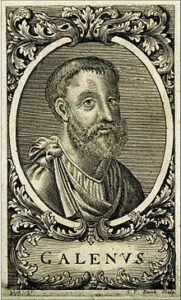
The Codex in Galen


The first talk of the morning was given by eminent scholar Clare Rothschild, titled “Galen’s De
Indolentia and the Early Christian Codex”.  The bulk of this talk was focused on the work of Galen, roughly translated as “concerning the freedom from pain” which was written to an unspecified individual describing his response to a fire that destroyed a large portion of his library in 192 CE.  Galen himself was a medical researcher, living in the Roman Empire in the 2nd and 3rd centuries.  While the text is meant to be about how to overcome the pain of loss, particularly the author’s loss, the bulk of the text is a catalog of the library's contents.

Among the many manuscripts that were destroyed, Galen recounts a “recipe” codex which contained various recipes for medicinal cures.  This catalog had been compiled by the author from physicians coming through Rome from all over the world.  They would trade recipes with one another during their interactions and Galen collected all that he had.  More fascinating than this early “Physician’s Desk Reference” is that the author had the forethought to organize the text by ailment, making it searchable for the reader.  Put simply, the physician could be presented with the patient and a description of the ailment, and the possessor of the codex would be able to turn to the applicable section for a remedy.  It is notable that Galen used a codex format for this type of book.

It may be worth noting at this stage that while the codex book-form is the common book-form today, this was not always the case.  Prior to the 4th century, the scroll was the most common book technology in mass production.  Much of the change from scroll to codex can be credited to Christian use, which I have written about here.  That being said, the codex was used in small amounts for various types of writing, yet prior to the 4th century the evidence of its use is fairly limited.  While it had, at one time, been postulated that Christians invented the codex, this is certainly not true.  It was also postulated that Christians used the codex to demonstrate that their texts were special or of high value.  While this has been an intriguing and entertaining thought, it no longer appears to be a sufficient explanation.  This is where Galen’s work adds to our understanding.


The Codex in Other Forms


Add to this the talk given by PhD candidate Jeremiah Coogan, “Navigating the Gospel: Nonlinear Access and Practical Use” and even more light is shed upon this fascinating transition in book technology.  Jeremiah’s research has revealed that, in general, two genres of book are frequently found in codex form: anthologies and legal texts.  Beginning with the second form first, while it is true that when a legal proclamation was made by the emperor, or a lower regent it was often read allowed in public on a scroll.  The reason for this, which can also be seen in early Greco-Roman art, is that a scroll carried a recognition of power.  When the scroll was unfurled before the people, the demonstration was significant in confirming the authority of the reader and the message contained within.

That being said, once this legal text had been read, and possibly displayed publicly, it would be removed from public view, but retained as a record.  The message contained on the scroll was then transferred to a page in a codex and stored.  These legal codices contained information that may need to be accessed, but often would not be something committed to memory or regularly read.  In essence, a legal corpus such as this would not be read like a novel, from front to back, but in segments.  It would not be read linearly.

In a similar way, anthologies were works like a modern-day encyclopedia.  Often these works would contain lists of items and brief descriptions below their title.  In one such work, the codex contained a list of birds, categorized by paintings of these birds, followed by a description of them.  The picture served as markers for where each section began and ended.  Additionally, there was an example of a magical text containing various incantations.  These incantations often began with headings describing what the spell would help with, but would also end with a particular marking denoting the end of the incantation before the beginning of the next.  In both examples, the texts often used, as with the example provided by Galen, were not intentioned for linear reading.


What Does this Have to do with the Bible?


How this relates to the Christian use of the codex may already becoming clear to some readers, but I will attempt to explain it now.  Prolific and eminent scholar Larry Hurtado postulates that the Christians used the codex for the New Testament, and ultimately the entire Bible, as a way of demonstrating that it was of high value.[2]  The reason for this was largely due to the cost of producing such a work.  However, in recent years other postulations have been made.  Another, which I have written some about, was postulated by Hurtado’s former student, Dr. Michael Kruger, suggesting that the portability of the codex over the scroll was especially helpful when dealing with multiple texts intended to be carried together.[3]  In this way, the adoption of the codex by Christians may point to an early “canon-consciousness” within the body of Christ.  In other words, the use of the codex reveals that the church was already thinking of certain books as a “canon”, likely starting with the Pauline epistles.

If we now add to these theories, the data revealed by both Rothschild and Coogan, the selection becomes more complex.  While we might say these new positions are contra Hurtado and Kruger, having spoken directly to one of the presenters, I feel it is better to say that they are in additio to Kruger and Hurtado.  Coogan’s work in non-linear reading does find correlation in the Gospels when we consider that they are largely written in pericopes, or small stories.  While it is true that the Gospels can be read from beginning to end and constitute an overarching narrative, they are also written in such a way as to be read non-linearly.  In fact, many four-Gospel manuscripts contained pages at the beginning of each Gospel with a painting of the Gospel author.  Even today, as those of us who study these manuscripts search them, we scan the pages online, looking for those paintings as a way to find our place.  This is a form of non-linear reading and place marking by the compiler for just such a purpose.   All one must imagine is the way a standard church service approaches the text of Scripture.  A Gospel or Epistle is not read in its entirety but only a section.  It is then, in some churches, picked up the following week, or a new topic is discussed from another segment.  It is also known from manuscript evidence that Christian churches were using lectionaries (weekly assigned readings for the year) as early as the 5th century, and the position of “reader” in the church is reported as early as the 3rd century.  Additionally, per Coogan, there are possible lection marks in the 4th century Codex Vaticanus that may suggest early traditions of reading the New Testament in a non-linear fashion.  If this is true, the codex book-form would be extremely efficient for such purposes.[4]

Additionally, returning to Rothschild’s discussion, it has become clear that the use of a codex did not, in and of itself, represent that a text was more valuable than another, unlike Hurtado’s suggestion.  While it may still be true that the Christians viewed theses texts as sacred, something Christ Keith dealt with in his talk and something I will hopefully discuss in the near future on this website, their use of the codex would not necessarily symbolize this.  How this is known, comes again from Galen’s De Indolentia, wherein he mentions that his most valuable texts are actually contained on scrolls, not codices.  Therefore, scrolls and codices were interchangeable regarding the “value” one might place on a manuscript.  However, unintentionally, both Coogan and Rothschild’s work overlapped in many ways.  Both demonstrated rather effectively that a prime feature of the codex was its ease of use when seeking to find a specific place in a text for perusal.  If we consider how many of us approach the Bible in our own homes even today, it is rarely to read through it linearly but to access a specific place.  Not only are we accessing a specific chapter or verse, but a specific chapter and verse in a particular book.  Before us is a virtual library of 66 separate books, delineated by headings, much like the work cited by Coogan, from which we can scan and isolate a particular place for reading, evangelizing or preaching.  This form of nonlinear reading would be almost impossible by modern thinking if the codex book-form had not been proliferated by the Christian church.  And the evidence that continues to come to light suggests that this may have actually been one of the very things they intended.

Conclusion


As I grow more familiar with the work of the saints that have come before us and the care which they have painstakingly taken with the Bible that we often take for granted, I am increasingly humbled.  This text did not come down to us roughshod or by accident.  It was not thrown together with little thought or even in a rush to combat heretical teachings growing in the church.  The Bible in your hands exists because those who came before us were contemplative, spiritually guided, individuals always thinking of how the Word of God must reach the ends of the earth.  It was their ingenuity that has produced the remarkable text before you, and we must never take that for granted.


* Conclusions made in this article are the author's.  It is not my intent to suggest that these conclusions were drawn by the presenters in their talks and I have sought to be clear within the article on this matter.


[1] A Palimpsest is a manuscript that was initially used for a different document than what is currently found on it.  It derives its name from the Greek word παλιμψηστος (palimpsestos) which means “scraped again”, referring to the practice of scraping the old ink off of the original document to reuse the material for another writing.

[2]Larry Hurtado, The Earliest Christian Artifacts.

[3] Michael Kruger, Canon Revisited.

[4] It should be mentioned that this form of non-linear reading in the Christian church was likely borrowed from the practice of the Jewish synagogue.  We read in Luke 4:16-21 of Jesus doing this very thing, and using a scroll for such purposes.  Because of this, we cannot stretch the link from the codex to the ease of non-linear reading too far.  A person trained in the use of a scroll and familiar with the text at hand could likely access a portion of it fairly quickly.  That being said, if multiple sections of different books were needed, as they would be in a lectionary situation, the number of scrolls needed would be cumbersome, whereas a single codex would be an improvement.

Does the Bible Approve of Abortion?


Posted by Clark Bates
May 28, 2019


This week’s post is another response to “meme theology”, or in this case it might be considered “meme exegesis”.  As the fires of the abortion debate have been stoked once again, with the introduction of new state legislation, making abortion illegal in almost all instances, the vitriol has flooded social media.  Recently, when engaging with an abortion advocate online, I was presented with the meme above and the claim that “the Bible promotes abortion”.  This is, of course, a backdoor attempt to religiously legitimize a practice most Christians find abhorrent, and it is often produced by those who would not seek biblical approval for any area of their life, making it disingenuous at best.

That being said, many Christians would simply reject the claim and respond in anger, possibly justified, but never actually examine the passages cited.  As I am a avid proponent of Christian apologists being biblically mature ahead of everything else, it follows that we should know the passages cited, their proper context, and how to respond biblically.  That is the purpose of this week’s article.  Below I will address each passage and seek to explain why they cannot, legitimately, be applied to the abortion agenda today.

Exodus 21:22-23


"When men strive together and hit a pregnant woman, so that her children come out, but there is no harm, the one who hit her shall surely be fined, as the woman's husband shall impose on him, and he shall pay as the judges determine.  But if there is harm, then you shall pay life for life, eye for eye, tooth for tooth, hand for hand, foot for foot, burn for burn, wound for wound, stripe for stripe."


The standard reasoning attached to this verse, and that which is implied in the meme, suggests that when a fetus is miscarried, the penalty is only a fine, whereas in the following verse, if the mother is killed, the penalty is life.  It has been articulated as follows:

“In other words, if you cause the death of the fetus, you merely pay a fine; if you cause the death of the woman, you lose your own life. Thus, the Bible clearly shows that a fetus is not considered a person. If the fetus were considered to be a person, then the penalty for killing it would be the same as for killing the woman—death. Abortion, then, is not murder.”[1]

The conclusions made in this reasoning stem from the belief that the Hebrew word יָצָא (yâtsâ) should be translated as “miscarriage” or as “depart”.  While the idea of “departing” is consistent with a possible translation, the concept of miscarriage is not.  This is a gloss based on the semantic range of the verb.  At its core, the verb is an action of “going out” or even “bringing forth”, which is its most common use in the OT.[2] This has also been acknowledged in modern English Bible translations, as the only version that translates this as suggesting the death of a child is the KJV.  All other English translations of this passage render the verse as “gives birth prematurely” which, while still being a gloss, is a more accurate treatment.

What is additionally important in this passage is the line that immediately follows:


“When men strive together and hit a pregnant woman, so that her children come out, but there is no harm…”


The “harm” in question here, is applied to the child, but could also, indirectly apply to the mother.  Let us also point out that even if we were to accept the tenuous linguistic argument that a “miscarriage” is in view here, that is not the same as an abortion.  An abortion is the intentional ending of an unborn human life.  A miscarriage can happen for many reasons, but always unintentionally.[3]

What’s more, in the following verse there is the penalty for what is to happen if harm does occur to the baby or the mother.  In such a situation, the law of lex talionis (eye for an eye) applies.  While those who use this passage to suggest that the Bible does not view a fetus as a human life argue that v. 22 applies to the fetus dying and v. 23 applies solely to the mother, they are making that argument on speculative grounds linguistically, and largely from presuppositions made prior to reading the text. 

That is why this verse led scholars like Meredith Kline, formerly of Gordon-Cromwell, to say:

“This law, found in Ex. 21:22-25, turns out to be perhaps the most decisive positive evidence in Scripture that the fetus is to be regarded as a living person.”[4]

And if this were not enough, there is the larger corpus of Scripture which clearly presents the unborn life as sacred.[5]

Leviticus 27:6


"The Lord spoke to Moses, saying, 'Speak to the people of Israel and say to them, If anyone makes a special vow to the Lord involving the valuation of persons, then the valuation of a male from twenty years old up to sixty years old shall be fifty shekels of silver, according to the shekel of the sanctuary.  If the person is a female, the valuation shall be thirty shekels.  If the person is from five years old up to twenty years old, the valuation shall be for a male twenty shekels, and for a female ten shekels.  If the person is from a month old up to five years old, the valuation shall be for a male five shekels of silver, and for a female the valuation shall be three shekels of silver.  And if the person is sixty years old or over, then the valuation for a male shall be fifteen shekels, and for a female ten shekels.'"


The argument from this passage is largely an argument from silence.  Not much need to be said here in the way of refutation, for there is nothing in the verse to bring one to the conclusion found in the meme.  What is at issue is that the law in this passage refers to the value to be paid for a person, beginning with full grown males and females, down to children up to 1 month old.  The argument then, is that since there is no monetary value listed for children less than 1 month old, the passage is positively stating that children less than a month (a fetus included) are not considered human life.
Hopefully it is clear, at the outset, that not having a monetary value attached to children under 1 month does not necessarily, or even logically, conclude that they are not considered human life. 

Formally stated, the argument from “silence is, in many cases, a lack of evidence, for the reason that the matter in question did not come within the scope of the author’s argument.”[6]  The assumption imported into the pro-abortion argument behind this verse is that a votive offering is somehow indicative of the redemptive value of human life.  The problem with such an assumption is that it is exactly that, an assumption.  The nature of a votive offering is unclear, especially in this text.

A votive offering is generaly recognized as an offering paid as part of a vow to God.  This vow could be for many reasons.  It could be a vow that resulted in blessing or protection.  In such cases the offering is either being paid by the offeror for themselves, or for the other party, but has no direct impact on the recognition of that individual’s humanity.  The reason for this is precisely as Dr. Briggs noted above so many years ago, the idea of the humanity of the individual was not within the scope of the argument.  As we have already seen, the value of unborn life was already clear in Jewish culture, and thus not part of the guidance in Lev. 27:1-7.  Even if the votive offering were one of redemption, it would be to redeem those who had made a vow, of service in most cases, to the temple or to the Lord in some fashion.[7] One can hardly expect a child less than one month old to be of service in a temple, especially since they would still be nursing.  A child of one month to five years could easily be of service, first with the mother, and then on their own, once old enough to work.  In either case, it has nothing to do with the humanity of the child.

Numbers 3:15-16


"And the Lord spoke to Moses in the wilderness of Sinai, saying, 'List the sons of Levi, by fathers' houses and by clans; every male from a month old and upward you shall list.'  So Moses listed them according to the word of the Lord, as he was commanded."


Suffice it to say, the repetitious nature of these citations should become very clear at this point. This is, yet again, an argument from silence.  The context of the passage is the official numbering of the Israelites by tribe.  Given that the infant mortality rate (as far as it can be determined) for Israel in Late Antiquity (3-8th century AD) was as high as 30% [8], the mortality rate for the Ancient Near East would be considerably higher.  Thus, when taking a census, it would not be reasonable to count children highly unlikely to survive.

Again, it must re-stated that the humanity of the child is not in the purview of the verse.  What is in  sight is the population count.  A child less than one month would be less likely to be counted, given the mortality rate.  Additionally, to reason that the verse above necessitates a conclusion that the infant is not human, begs the question.  One must begin with the presupposition that (a) an unborn child is not human, or (b) the Bible explicitly states that an unborn child is not a human.  Option (a) is a modern philosophical invention being imported into the text, and option (b) is non-existent in the text.

Numbers 31:15-17; Hosea 9:14;16; 13:16; 2 Samuel 12:14


"Moses said to them, 'Have you let all the women live?  Behold, these, on Balaam's advice, caused the people of Israel to act treacherously against the Lord in the incident of Peor, and so the plague came among the congregation of the Lord. Now therefore, kill every male among the little ones, and kill every woman who has known man by lying with him.' "

"Give them, O Lordwhat will you give?  Give them a miscarrying womb and dry breasts....Ephraim is stricken; their root is dried up; they shall bear no fruit.  Even though they give birth, I will put their beloved children to death....Samaria shall bear her guilt, because she has rebelled against her God; they shall fall by the sword; their little ones shall be dashed in pieces, and their pregnant women ripped open."


"Nevertheless, because by this deed you have utterly scorned the Lord,the child who is born to you shall die."


Given that several passages are in view here, let’s address them at one time.  To begin, the statement attached to these passages in the meme points out that God either “approves of” or actively “kills” fetuses or newborns.  Before even looking at the verses in question, an immediate response can be made on purely theological grounds.  As I have addressed in another post, God is the rightful owner of all humanity as He is the ultimate cause for all human life that ever has been and ever will be.  Because of this, it is solely within His right to take the life of whomever He pleases.

Setting that point aside, Numbers 31:15-17 refers to the killing of male children, not unborn babies,
while addressing the issue of killing children is a topic worth discussing, it is not part of the argument for abortion that this meme is attempting to make, unless the abortion advocate is willing to acknowledge that a fetus is as much a human life as a born child, to which we would agree, but this is not an argument many will make.  The command to kill the male children is to prevent the Midianite boys from growing up to seek vengeance upon the Israelite people.  While it might seem extreme to modern sensibilities, it was a common practice of the age.

When addressing the Hosea 9 passages, it should be understood from the beginning, that the language used is poetic and figurative.  The nation of Israel is being represented in many ways, but all negatively.  Chapter 9 begins with punishments that will befall Israel because of their rejection of the law of God.  The verses immediately prior to those in the meme declare that the nation will be childless, either in an inability to conceive or to bring to term, and it is God acting out this judgment.  All references to unborn children in 9 are to miscarriage or infertility.  The direct killing stated in v.16 refers to born alive children.  While it is true that judgment language of this kind is found in many Ancient Near Eastern texts, they are commonly hyperbolic in the extremity to which they will go.

Clearly the Israelites did bear children that survived, as there are Israelites still living to this day.  Therefore, what we have in Hosea is a divine judgment text, not meant to be taken woodenly but as a blanket judgment of destruction to the people.  Barrenness itself was considered a divine curse throughout this time and beyond.[9]  While Numbers 13:16b is the closest any of these verses might come to speaking of an unborn child being murdered, it again falls within the context of a judgment text.  These actions did take place, and they were under the sovereign will of God, but to be equivalent to the pro-abortion argument it would require the proponent to believe that God was actively commanding them to commit the abortion AND that the abortions being performed were part of God’s judgment on the people receiving them.  Again, this is not an argument that will be made.

Lastly, 2 Samuel recounts the well-known passage in which David’s child by Bathsheba dies.  While the statement attached to this verse in the meme is technically correct, it again does nothing to support the current, pro-abortion, position.  Yes, it is true that God allows the death of, or even kills, a child to punish the parents.  This is clearly the case for David.  Yet, this is not normative either.  It is not abortion on demand for any reason, at any time.  Also, as has been stated above, it is God’s prerogative to take human life, and in this case, it is in the form of a child dying of natural causes AFTER birth.  It is not a case of child neglect, as has been approved in states like Virginia and New York, and is not tantamount to an abortion.  Secondly, as was also noted above, this is DIVINE JUDGEMENT upon the parents.  Unless the abortion practitioner or the one promoting abortion is suggesting that they are God’s tool of judgment upon the mothers, the reasoning does not follow.

Numbers 5:21; 27-28


And the Lord spoke to Moses, saying, 'Speak to the people of Israel, If any man's wife goes astray and breaks faith with him, if a man lies with her sexually, and it is hidden from the eyes of her husband...the priest shall bring her near and set her before the Lord. And the priest shall take holy water in an earthenware vessel and take some of the dust that is on the floor of the tabernacle and put it into the water....Then the priest shall make her take an oath, saying, ‘If no man has lain with you, and if you have not turned aside to uncleanness while you were under your husband's authority, be free from this water of bitterness that brings the curse.  But if you have gone astray, though you are under your husband's authority, and if you have defiled yourself, and some man other than your husband has lain with you...the Lord make you a curse and an oath among your people, when the Lord makes your thigh fall away and your body swell. May this water that brings the curse pass into your bowels and make your womb swell and your thigh fall away.’ And the woman shall say, ‘Amen, Amen.’"


This passage is often cited as one in which God “causes an abortion”.  At best, what may be in view here is another example of a miscarriage, but even this is suspect.  No, popularly used, English translations interpret this text to reference an abortion.  The exact statement is that the “abdomen will swell” and the “thigh will fall away”.  Both are euphemistic terms that are unclear.  While it is possible that the swelling of the abdomen might be suggestive of an illegitimate pregnancy that fails to come to term[10], the reference to the “thigh” is consistently euphemistic of the sexual organs.[11]
Rather, “The most probable explanation for the phrase 'and make your abdomen swell and your thigh waste away . . .' is that the woman suffers a collapse of the sexual organs known as a prolapsed uterus. In this condition, which may occur after multiple pregnancies, the pelvis floor (weakened by the pregnancies) collapses, and the uterus literally falls down. It may lodge in the vagina, or it may actually fall out of the body through the vagina. If it does so, it becomes edematous and swells up like a balloon. Conception becomes impossible, and the woman’s procreative life has effectively ended . . .”[12]  This being the case, pregnancy is not in view but rather the inability to ever conceive.

Genesis 38:24


"About three months later Judah was told, 'Tamar your daughter-in-law has been immoral. Moreover, she is pregnant by immorality.' And Judah said, 'Bring her out, and let her be burned.' "


The caption attached to this last verse declares that the “law of God” required the execution of pregnant women by burning to death.  Suffice it to say that the Law does not prescribe the burning of pregnant women, least of all here.  The larger context of this story is a narrative, not a legal passage, therefore drawing the conclusion that the actions taken or even attempted are approved by God would be contrary to the genre of the text.

The narrative within which this verse falls is the deception of Judah by his daughter-in-law, Tamar.  In the story, Tamar, has married Judah’s son, Er, but he has died without producing an heir.  According to the law, it falls to the closest male sibling of her husband to marry her and produce a child.[13] Judah commanded his second son, Onan, to perform his duties as the levirate, but Onan did not.  This left Tamar without an heir and without a husband, leaving her helpless as a woman in that time.  Tamar’s recourse is to disguise herself as a prostitute and convince her father-in-law, Judah, to sleep with her.  He does this, and she becomes pregnant.  The law actually requires that Judah marry Tamar at this point.

When Judah is told that his daughter-in-law has conceived through prostitution, he responds violently, but not in any way sanctioned by OT law.  When he learns that he is actually the father, he immediately adopts his role as her kinsman redeemer.  Judah, the one calling for her to be burned, is depicted in this narrative as the enemy, not the hero.  It is Tamar that is the righteous character in this story, for she is doing what is necessary to protect herself and ultimately continue the messianic line that would lead to David (Ruth 4:18-22) and ultimately to Christ (Matt.1:6-17).  Therefore, this verse neither promotes abortion, nor does it depict the law of God as validating the burning of a pregnant woman.  To suggest so is, like every other claim in the meme, a non sequitur.

Conclusion


Certainly, it can be said that a refutation of this position can be made without even appealing to the Bible.  Strictly operating from a theological standpoint and arguing back from the nature of God and His relation to mankind, to disprove any concept that God would approve of the modern practice of abortion.  However, as Christians, and apologists, it behooves us to know the biblical text intimately, and even a quick investigation into these texts and the surrounding context reveals the impotency of the argument presented.

The argument ultimately devolves into a form of, “If God can do it, so can I”, and this is probably the most accurate of statements to be made.  The inner corrupted desire of all mankind is to usurp the authority and role of God in their lives, and the abortion industry is no different.  The pro-abortion argument from Scripture is nothing more than tacit agreement that the person in favor of abortion is seeking to be God.


[1] Graham Spurgeon, “Is Abortion Murder?” in The Religious Case for Abortion, p. 16

[2] See Gen. 1:24; 4:16; 9:18; Ex. 28:35; 29:46; 32:34 and many, many more.

[3] The Mayo Clinic defines a miscarriage as the “spontaneous loss of a pregnancy before the 20th week.”

[4] M. G. Kline, “Lex Talionis and the Human Fetus,” JETS 20 (1977): 193-201

[5] Job 10:8-12; 15:14; Ps. 51:5; 58:3; 139:13-16; Eccles. 11:5; Jer. 1:5; Gal. 1:15

[6] C.A. Briggs, “The Argument E Silentio: With Special Reference to the Religion of Israel,” Journal of the Society of Biblical Literature and Exegesis, vol.3 (1), (June, 1883).

[7] This is similar to the vow made by Hannah concerning her son Samuel in 1 Sam.1:11.

[8]Meir Bar-Ilan, Mortality Rate in the Land of Israel in Late Antiquity: https://faculty.biu.ac.il/~barilm/articles/to_check/infant.html

[9] Consider the barrenness of Sarah (Gen. 15:2); Hannah (1 Sam. 1:5-11); the curse of David’s wife Michal (2 Sam. 6:23) and even the statement made by Elizabeth (Lk. 1:24-25).

[10] R.K. Harrison, Numbers, WEC, 111-3.

[11] Walter Riggans, Numbers, Daily Study Bible Series, p. 50 (cf. Gen. 24:2)

[12] Tikva Frymer-Kensky, “The Strange Case of the Suspected Sotah (Numbers V 11-31), Vetus Testamentum, 34:1 (January, 1984).  Also, Frymer-Kensky, “The Trial Before God of an Accused Adulteress,” Bible Review, 2:3 (Fall, 1986).

[13] Deut. 25:5-10

Do We Believe in the Bible Because of Christ or in Christ Because of the Bible?


Posted by Clark Bates
April 22, 2019


Recently on social media, a Q&A from Dr. William Lane Craig’s website, Reasonable Faith, made the rounds.  Needless to say, it has caused no small stir amongst the Reformed on social media, and likewise it has concerned me.  Before I begin though, let me state that this is not going to be an attack on Dr. Craig or his theology.  I have great respect for Dr Craig and the work that he does. He has even given me some very wise advice early in my apologetic pursuits, and I will always be thankful for that.  What concerns me, and has for many years now, is the increase in compromise that I have seen come from within the so-called “Mere Christianity” movement, of which Dr. Craig is a large contributor.

These compromises often center doctrinally around what can best be described as Sola Resurrectio or the resurrection alone.  By this, I mean that the only important Christian doctrine that needs to be pressed on an unbeliever is the fact of the resurrection of Jesus Christ.  If this can be proven, usually from the famed “minimal facts” approach, it is theorized that everything else that Christians believe, and what the Bible teaches, must be acceptable.  While I disagree even on logical grounds that simply because Jesus of Nazareth rose from the dead, the rest of Christianity necessarily must be true, what is more troubling is the extent to which this perspective has been taken.

A popular evangelical minister has made headlines in recent years with ever increasing claims about the value believers should place on the Bible itself.  He has taught sermon series that challenge historical aspects of the Bible, cardinal beliefs of the Christian faith, and most recently suggested that Christians should cease to use the Hebrew Bible as it is not authoritative for the believer.  This preacher’s main thesis for this increasing polarity is that the only thing that matters is the resurrection.  It is Sola Resurrectio ad extremo. I am not laying this pastor’s actions at the feet of Dr. Craig, although it should be noted that Dr. Craig and other apologists involved in the Mere Christianity movement have continued to express support for this pastor and his actions.  Rather, this is just an example of the extremes to which Sola Resurrectio can go.

I say all of this to set the stage for why the question and answer article posted at Reasonable Faith has caused such a stir, and why the response from Dr. Craig is what it is.  The Question posed to Dr. Craig concerned an interview given by Dr. Craig in January of this year.  This is the question:


Hello Dr. Craig,


I appreciate your work and am going through the Defender podcasts I enjoyed your interview with Erik Thoennes of Grace Evangelical Free in January 2019. In that interview you said "We believe in the Bible because we believe in Christ. We do not believe in Christ because we believe in the Bible". Can you explain what you meant by that statement ?


Thank you !


I have not seen this interview, so I cannot comment on anything that was said during the actual discussion.  This is why I am limiting this article to Dr. Craig’s posted response.  It begins this way:


"Sure! What I’m expressing in a pithy way by this aphorism (which is not original to me!) is that in order to rationally believe in Christ as Savior and Lord, you need not embrace biblical inspiration or inerrancy. So long as the New Testament documents are sufficiently reliable to establish the historicity of Jesus’ radical personal claims and the historicity of his crucifixion, burial, empty tomb, post-mortem appearances, and the origin of the disciples’ belief in his resurrection, then you are warranted by the evidence in believing that Jesus rose from the dead and so was who he claimed to be. That suffices for a Christian commitment."


To begin with, Dr. Craig asserts that the “pithy aphorism” he has employed is referring to the belief in the inerrancy and inspiration of the Bible, but if that is in fact the case, and I take Dr. Craig at his word here that it is, the aphorism says nothing about either doctrine.  The purpose of an aphorism is to create an easy-to-remember mnemonic for a larger truth.  This aphorism seems to imply that the Bible should be doubted were it not for Christ.  If you have to explain the aphorism then it has failed to serve its purpose.  But let’s look at the larger claim being made.  Dr Craig says that,
“So long as the New Testament documents are sufficiently reliable to establish the historicity of Jesus’ radical personal claims and the historicity of the crucifixion, burial …then you are warranted by the evidence in believing Jesus rose from the dead and so was who he claimed to be.”

Here is where I struggle.  What appears to be going on is nothing more than a semantic game, for what Dr. Craig is saying is that we don’t believe Christ because of the Bible, but because of the reliability of the “New Testament documents”.  The New Testament documents are part of the Bible.  They were viewed as Scripture on par with the Old Testament within the lifetime of the apostle Paul.  So, in reality Dr. Craig is affirming the exact opposite of his aphorism.  He does in fact believe in Christ BECAUSE he believes in the Bible! I actually don’t disagree here either.  I believe that the Bible is the sole infallible rule of faith and practice for the Christian and that includes the belief in the resurrection of Jesus Christ.  Despite the increasing trend of shying away from referring to the Bible as the Bible, a rose by any other name….

Dr. Craig’s response does not end there.  He goes on to say:


"Even taken as ordinary, fallible human records, the New Testament documents have been shown to be reliable with respect to these facts. Too many Christians naively think that unless you presuppose biblical inspiration and inerrancy, the historicity of the life of Jesus goes down the drain. This attitude, far from showing confidence in the Bible, actually betrays a profound lack of confidence in its historical credibility. Without the theological assumptions of inspiration and inerrancy to hold it up, the Bible is implicitly taken to be untrustworthy on this view.


But once one becomes a Christian, then one submits to the teaching of the Lord Jesus.  When we see how Jesus regarded the Old Testament, we perceive that he taught it to be the inspired and wholly reliable Word of God. So as his disciples, we should, too. We believe in the Bible because we believe in him."


- William Lane Craig


While it might be true that some Christians believe that inerrancy and inspiration are the only means by which the Bible can be true, this is certainly not the prevailing view in academia or in the majority of seminaries or pulpits.  The following statement also seems to be a false dichotomy that believing that the Bible is inspired by God, something affirmed by the apostle Paul, is somehow naïve and betray a lack of confidence in its historical credibility.  Clearly the apostles and the Lord himself believed in the inspiration of the Old Testament AND its historical credibility.  To say that these “theological assumptions” are mistaken creates more havoc within Christian belief than most in the mere Christianity movement seem to recognize or want to acknowledge.

Finally, Dr. Craig affirms the inspiration of Scripture only after it is clear that Jesus believed this.  Yet, as I’ve stated above, Dr. Craig inadvertently affirms that belief in the reliability of the New Testament is how someone believes in Jesus, meaning that the entire argument is ultimately circular. If we remove the semantic wordplay the response devolves to, “I believe in Jesus because the Bible is reliable and because the Bible is reliable about Jesus, I believe that the Bible is inspired.

Conclusion


In the end, I agree with all the things that Dr. Craig inadvertently admits.  I do not agree with the use of confusing aphorisms that really only exist for shock value.  As I have written elsewhere, the most important verse in all of Scripture is 2 Timothy 3:16, precisely because it is the affirmation that all of Scripture is “God-breathed”.  This is the reason that the Bible carries the weight of authority that it did for the Jewish believers of old and the Christians that would follow.  To affirm it as any less, even with the noble intention of wanting to bring someone to faith in Christ, is to play a type of deceptive game.  It is not helpful to deceive someone into the faith.  Likewise, multiple studies from the Pew Research Center, Ligonier Ministries, and the George Barna Group repeatedly demonstrate that biblical literacy in the American church is at an all-time low.  The answer to this disturbing trend is not to remove large portions of the Bible to make it easier for Christians and non-Christians, but to increase the teaching of the full counsel of God’s Word, even in apologetics.  Let us strive for higher, not set the bar lower.

The Resurrection: Physical Body or Disembodied Spirit?


Posted by Clark Bates
April 16, 2019


This week is Holy Week, when the Christian church reflects on the death and resurrection of Jesus Christ.  As everyone knows, even if they are not Christian, the week culminates with Easter Sunday, long believed to have been the historical day of the week when Christ rose from the grave.  Special occasions such as this are essential for life within the church as they remind us of the reality of our core beliefs.  At the same time, public celebrations such as this also create a target of sorts for nonbelievers and skeptics, wherein they can attack what they perceive as “foolishness” within Christianity.  While this has taken many forms for millennia, one of the more recent attacks related to the resurrection of Jesus is the nature by which he was raised.

I am referring to the belief that Christ was not raised bodily, but that the disciples only saw visions of him.  This argument has waxed and waned through the years, finding adherents in the likes of Rudolf Bultmann, Marcus Borg, John Dominic Crossan, and even Bart Ehrman.  It has recently been “resurrected” (pun intended) by the modern Jesus mythicist movements.  While not quoting from any one skeptic in particular, the form of this argument often traces to the statements of the Apostle Paul in 1 Corinthians 15.  In what is arguably a favorite passage for Christian apologists because of its antiquity and its presentation of the resurrection, 1 Cor. 15:3-9 contains the earliest recorded creed of the Christian church.  While this might seem like fool-proof evidence in favor of the bodily resurrection, some skeptics have argued that it is the exact opposite.  The argument follows these general premises:


In vv. 5-8 Paul relates the resurrection appearances of Christ, including himself at the end.
Paul is implicitly comparing these appearances with his own, suggesting that he saw Christ in the same way that the apostles and these others did.

However, according to Acts 9:5-7, Paul only had a vision wherein he heard the voice of Jesus.

What’s more, Paul goes on to say in 1 Cor. 15:44 that the believer’s resurrection body is a “spiritual body” not a natural one.

And, in 1 Cor. 15:50, Paul unequivocally states that “flesh and blood cannot inherit the kingdom of God”.

Therefore, according to the apologist’s favorite resurrection passage, Paul is arguing for a spiritual resurrection or type of vision, NOT a physical, bodily resurrection as is often claimed.


Based on this argument, it is reasoned that the belief in a spiritual resurrection preceded belief in a physical resurrection.  The strengths of the argument are that it appears to follow the evidence within the text and it hinges on the oldest creed in Scripture, making it prior to any other writing.  Because of this, it cannot be argued that because the Gospels record a physical resurrection of Jesus, that Paul means that he too saw Jesus bodily, because the creed Paul uses in 1 Corinthians predates every Gospel.

So, what do we do with this claim?


The best response is one that takes the claim seriously and examines each line of evidence.  The first few arguments are not really deniable.  It is true that Paul is comparing his experience with the risen Lord to that of the apostles.  It is also true that the recording of Paul’s conversion in Acts 9 only recounts a voice, not a bodily appearance.  For this reason, I see no need to argue against the first points.  The real question comes with the context of the 15th chapter of 1 Corinthians.  What does Paul mean by “spiritual body” and “flesh and blood cannot inherit the kingdom of God”?


What Was Paul Thinking?!


Immediately following Paul’s use of the creed, in vv. 12-34, he responds to an unknown question posed by the Corinthian church.  He states,


“Now if Christ is being preached as raised from the dead, how can some of you say there is no resurrection of the dead?”


It would seem that there are some, perhaps a Christian faction, within the church at Corinth that are claiming that there is no resurrection from the dead.  The apostle’s response is to point out that if there is no resurrection from the dead then neither is Christ raised, so why are you preaching the resurrection of Christ?!  What follows is the adamant assertion that without the resurrection of Christ there is no Christian faith.  He then follows that point by arguing that Christ was the “firstfruits” (i.e. one to come first) of all believers that die, meaning that His resurrection is emblematic of the Christian’s resurrection.  This is followed by another critique of those who are baptizing for the dead.  While nothing is known about this practice, it can be presumed that the same individuals arguing against the resurrection of the saints are the ones performing this baptismal ritual because Paul’s point is that it’s nonsensical to baptize for the dead if there is no resurrection! What’s more, he will go on to say, there is no reason to live in any other way than licentiousness, for without the resurrection, life is fleeting.

Natural Body or Spiritual Body?


In vv.35-54, we have the statements quoted by the skeptic.  In v.44, Paul states that “it” (i.e. the body
of the saint) is sown a natural body and raised as a spiritual body.  In Greek it is the apposition of two terms ψυχικὸν (natural) vs. πνευματικὸν (spiritual). However, v.44 doesn’t stand alone.  It is the continuation of a thought that really begins as far back as v.35 wherein the Apostle begins discussing the different types of bodies in the created world.  The point of this digression is to persuade the reader that a “body” can take on multiple forms.  This is especially true in the case of a seed that has one kind of body when it is laid in the ground, but a completely different type of body when it springs forth from the ground.  Both bodies are different, but they are still bodies.

That being said, the immediate context of v.44 begins in v. 42 where Paul writes,


“It is the same with the resurrection of the dead.  What is sown is perishable, what is raised is imperishable.  It is sown in dishonor, it is raised in glory; it is sown in weakness, it is raised in power; it is sown a natural body, it is raised a spiritual body.”


It is clear that there is a pattern of comparison being made here:

Perishable vs. imperishable = dishonor vs. glory = weakness vs. power = natural vs. spiritual

To put it another way:

Perishable = dishonor = weakness = natural
Imperishable = glory = power = spiritual

There is one final comparison made in v. 45:


“So also it is written, ‘the first man, Adam, became a living person”; the last Adam became a life-giving spirit.”


What we have in this portion of Paul’s argument is not a discussion of bodily resurrection versus a disembodied spirit, but a discussion on that which was made in Adam but restored in Christ!  That which was sown a natural body is that which was under Adam; that which was raised a spiritual body is that which is under Christ.  In both cases there are bodies, but the difference is who has control.[1]

What about the Flesh and Blood?


Moving to v. 50, we come to the last claim.  Paul writes,


“Now this is what I am saying brothers: flesh and blood cannot inherit the kingdom of God nor does the perishable inherit the imperishable.”


As we have just seen above, the argument Paul is using in the preceding verses is still being applied here.  The use of “flesh and blood” clearly means physical in the same sense as the “natural body” of v.45, but it is again qualified with the same language.  The perishable does not inherit the imperishable, therefore it must be changed from perishable to imperishable; from mortal to immortal.  The emphasis in chapter 15 is not on the corporeal or a disembodied spirit, but the transference of a sinful body to one renewed in Christ Jesus.  A different body, but not the lack of a body.

Conclusion


Without appealing to the Gospels for support it is possible to diffuse the power of this skeptical claim, simply by letting Paul speak for himself.  While the argument seems weighty at first blush, a closer look at the text reveals that it stands on sinking sand.  It could be noted as well that the idea of a physical body ascending to the gods is not foreign to Greeks[2] or Jews[3] and thus, the bodily resurrection of Jesus and his subsequent ascension was not without general precedent.  What would be striking to them is how this action of Jesus’ could affect anyone else.  This is why Paul’s argument carries the weight that it did.  Not only did this Jesus rise bodily from the grave and was seen, but his resurrection guarantees that those who are “in Christ” will share in the same victory over death.
The resurrection of Jesus is the most important part of Christian belief not only because it is the culmination of who Jesus is, but also because it is the promise to all those who follow after Him.

Happy Easter!


[1] It should also be noted that the use of ψυχικὸν can mean a great many things, but one which fits this context best is that of “creaturely”.  The body under Adam was creaturely, but raised as spiritual under Christ.  Meaning, no longer a slave to the creaturely desires of old.

[2] Achilles (except in Homer), Memnon, Asclepius, Melicertes, Menelaus and Ino are Grecian examples.

[3] Elijah and Enoch are Jewish examples.